

Key takeaways
- To hang Christmas lights on a house without damage, use outdoor-rated lights and clips designed for your specific surface, such as gutters, shingles.
To hang Christmas lights on a house without damage, use outdoor-rated lights and clips designed for your specific surface, such as gutters, shingles, or siding, and never use nails, staples, or tacks through the light cord. Plan the layout on the ground first, measure your runs, and work with a stable ladder and a helper.
The damage most homeowners regret comes from the wrong fasteners: staple holes in trim, scraped paint, bent gutters, and cords pinched in a way that wears insulation. A little planning turns the job into a one-afternoon project that comes down cleanly in January. Read on for a surface-by-surface approach, a clip comparison, and the safety points that matter most when you are working outdoors at height.
Plan the Layout Before You Climb
Walk around the house at dusk and decide what you want to outline: the roofline, windows, door frame, porch posts, or bushes and trees. Sketch simple measurements, then add up the length of each run so you can buy the right number of strands. Note where outdoor outlets are located, since every strand has to reach a power source without stretching across walkways.
Check the packaging to confirm that the lights are rated for outdoor use, and read the limit on how many strands can be connected end to end. Overloading a connected run is a common cause of tripped breakers and damaged wiring. If you are unsure about outlets, extension cords, or ground fault protection, consult a qualified electrician before you start.
Pick the Right Attachment for Each Surface
The right hardware prevents most damage. Match the clip to the surface it will touch, and avoid anything that pierces the cord or cracks the material.
Gutters and eaves
Gutter hooks or clips that grip the lip of the gutter hold a strand in place without drilling. Make sure the clip fits the thickness of your gutter style. Avoid using gutters as a ladder rest for heavy loads, because the metal can bend.
Shingles and roof edges
Shingle clips tuck under the edge of a shingle tab and hold the cord against the roof line. Use them carefully, since forcing a clip under a brittle shingle in cold weather can crack it. Stay off steep or icy roofs entirely, and hire a professional installer for high or complex rooflines.
Siding, trim, and brick
For siding, use clips that hook under the lap or adhesive-backed hooks rated for the exterior material and temperature. For brick, brick clips grip the mortar line or the edge of the brick without drilling. Try an adhesive hook in a hidden spot first, since some products can lift paint when removed.
Trees, shrubs, and railings
For trees and bushes, drape lights loosely rather than wrapping tightly, so branches have room to grow. Plastic ties, loosely applied, work on railings and posts. Remove them promptly after the season so they do not cut into growth.
Attachment Options Compared
| Surface | Suitable fastener | Avoid | Damage risk |
|---|---|---|---|
| Gutter | Gutter hook or clip | Nails or screws through gutter | Low when sized correctly |
| Shingle | Shingle tab clip | Staples or roofing nails | Medium on brittle shingles |
| Vinyl siding | Siding clip under the lap | Tacks and hammered nails | Low to medium |
| Wood trim | Cord clips on existing hardware | Staple guns | Medium |
| Brick | Brick clip | Drilling | Low |
| Railing or post | Loose plastic ties | Tight wire wraps | Low |
Work Safely at Height
Falls are a bigger danger than any electrical issue. Use a sturdy ladder placed on level ground, keep three points of contact, and have someone hold it. Never overreach; move the ladder instead. Do not work in wet, windy, or icy conditions, and avoid working near power lines.
Before hanging anything, plug each strand in at ground level to confirm it lights. Unplug strands while you attach them, and plug in only after the run is in place. Keep plugs and connections off the ground and shielded from standing water, using a weatherproof cover for any connection exposed to rain or snow. Use outdoor extension cords with the correct rating, and keep them away from walkways where people could trip.
Hang It in a Sensible Order
- Start at the outlet end and work outward so cords always lead back to power.
- Attach a clip every few inches along straight runs, following the spacing printed on the clip package.
- Keep strands snug against the surface but not tight, since cold weather causes cords to contract.
- Run strands horizontally along the edge, and avoid twisting the cord around corners.
- Plug in the full run after each section, and fix issues before moving on.
- Tuck extra cord out of sight rather than letting it hang in loops.
Before You Start Checklist
- Confirm all lights and cords are rated for outdoor use.
- Measure each run and note the number of strands needed.
- Buy the right clips for your gutter, shingle, siding, or brick.
- Locate outdoor outlets and decide where cords will run.
- Check the weather forecast and choose a dry, calm day.
- Have a spotter, a sturdy ladder, and gloves ready.
- Consider a timer or smart plug so lights turn off on schedule.
Taking Lights Down Without Damage
Removal is where many scrapes and cracks happen. Remove clips gently, working in the same order you hung them, and avoid pulling the cord from the wall. If an adhesive hook sticks, follow the manufacturer’s removal instructions rather than yanking it. Coil strands loosely around a flat piece of cardboard, or a reel, and store them in a dry container. Labeling each coil by location makes the 2026 setup much faster.
Design Ideas That Work on Most Homes
A clean design is easier to hang and easier to remove. The simplest approach is a single line of lights along the roof edge or gutter, which defines the shape of the house. Add a second line around the front door and windows, and the home looks complete without much extra work. Keep the colors consistent, since mixing warm white on the roof with multicolor on the windows can look unplanned.
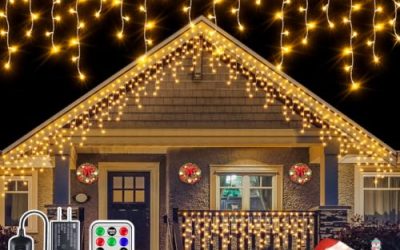
For a layered look, wrap porch posts in a spiral, outline the garage door, and place a few strands in front shrubs. Net-style lights draped over bushes cover a lot of ground quickly and avoid the tangle of wrapping each branch. Icicle-style strands hung from the eaves create a falling effect, and they work best when spaced evenly along a straight edge.
Think about how the house looks from the street, not just from a ladder. Step back every few minutes to check that spacing and brightness look even. Timers and smart plugs keep the display on a schedule, so you are not walking outside to flip a switch every evening, and shorter run times reduce wear on the strands. Always keep lights away from dry foliage and flammable decor, and turn them off if you see damage or hear buzzing from a connection.
Budget Your Time and Cord Length
A full roofline can take several hours, so split the job over two days if needed, with the roof edge first and the doors, windows, and shrubs second. Measure the distance from each outlet to the start of each run, and buy outdoor extension cords with a little spare length, so no cord is pulled tight across a doorway or walkway. Tight cords are more likely to pull loose from clips in wind.
Related guides
- How To Hang Streamers And Backdrops Without Damaging Walls
- How To Fix A Christmas Light Strand That Is Half Out
- How To Wash A Light Up Ugly Christmas Sweater
Frequently Asked Questions
Can I use staples or nails to hang Christmas lights?
It is best not to. Staples and nails can pierce the cord, creating shock and fire risks, and they leave holes in trim and siding. Use clips designed for your surface instead.
How many strands can I connect together outdoors?
That depends on the product. The packaging gives a maximum number for end-to-end connections, and you should never exceed it. LED strands generally allow longer runs than older incandescent ones, but follow the label.
How do I hang lights on a roof without climbing on it?
Use a ladder at the eaves with clips that attach from below, or consider a pole-style tool made for placing clips from the ground. For steep or tall roofs, hiring a professional is the safer option.
When should I put lights up?
Mild, dry days are best, because cords are more flexible and the work is safer. Many homeowners hang lights in early autumn weather and switch them on after the holiday season begins.
More from Amazon
Programs that pair well with the guide above. Offers and eligibility are set by Amazon and may change.
Send a Prime gift membership to someone who would use free shipping and Prime Video.
Gift Amazon PrimeGive audiobooks to someone who loves to listen. Plans and prices are set by Amazon.
Gift AudibleFree shipping on eligible items, Prime Video and more. Eligible new members can start with a free trial.
Start a Prime free trialAudiobooks and podcasts to listen to on the go. Eligible new members can start with a free trial.
Try Audible freeAs an Amazon Associate we earn from qualifying purchases.



Write Your Review
No reviews yet. Be the first to share your experience!