

Key takeaways
- Four is a fascinating age for games. A child that age can follow simple rules, take turns most of the time, and recognize colors and shapes.
Four is a fascinating age for games. A child that age can follow simple rules, take turns most of the time, and recognize colors and shapes, but a lost game can still end in tears and a long rulebook ends the session before it begins. The best board games for 4 year olds reward short attention spans, rely on pictures instead of reading, and let a preschooler win often enough to want another round. Luck-based play helps for this reason, since a four-year-old beating a parent fair and square is what keeps the table full.
This guide is for parents, grandparents, and preschool helpers choosing a first set of games. Eight options are compared using only the facts in their titles: stated age floors, player counts, and play styles from spinners to balancing to card matching. Titles often say ages 3 and up, which means a four-year-old falls inside the range but may be better matched to a particular style. Always follow the manufacturer age grading, check the listing for small-part warnings, and supervise play, since pieces such as beans, fish, and cherries can be a hazard for younger siblings.
Quick Picks
Our top picks




As an Amazon Associate we earn from qualifying purchases at no extra cost to you.
| Product | Best for | Key spec from the title |
|---|---|---|
| Candy Land Kingdom of Sweet Adventures | A first color-matching race | Ages 3 and up, classic Hasbro game |
| Don’t Spill the Beans | Steady hands and balance | Ages 3 and up, preschool balancing game |
| Let’s Go Fishin’ by Pressman | Quick, active play | Fast-action fishing, 1 to 4 players |
| Don’t Break the Ice | Group suspense | Ages 3+, 2 to 4 players |
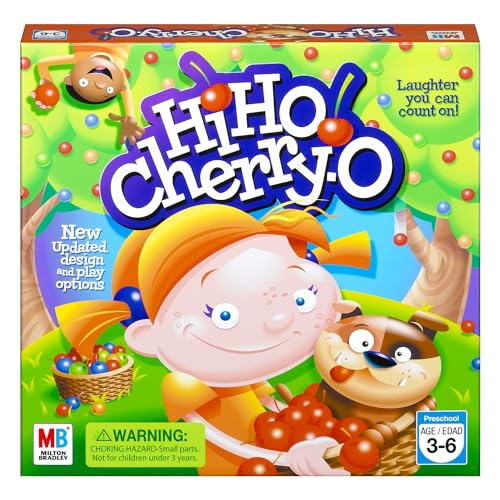
| Hi Ho Cherry-O | Early counting practice | 2 to 4 players, ages 3 and up |
| Chutes and Ladders: Marvel Spider-Man Edition | Superhero fans | 2 to 4 players, preschool, ages 3 |
| ThinkFun Zingo Bingo | Pre-readers moving toward reading | Age 4 and up, for pre-readers and early readers |
| Mattel UNO Junior | Learning a card game | Ages 3+, 2 to 4 players, 3 levels of play |
How to Choose
Look for games that need no reading
At four, most children are not reading, so the game has to run on pictures, colors, and simple actions. Spinner and card-color games such as Candy Land and Chutes and Ladders ask for matching a color or counting spaces, with no text to decode. Zingo Bingo is aimed at pre-readers and early readers by title, which makes it a bridge between picture matching and word recognition. A game that requires a parent to read every card aloud can still work, but it shifts the fun from the child to the adult.
Match the play style to the child’s energy
Some preschoolers love dexterity and suspense, so Don’t Spill the Beans and Don’t Break the Ice work well. Others prefer a fast burst of movement, which suits Let’s Go Fishin’. Racing games reward patience and turn-taking, while cooperative-feeling activities reduce the sting of losing. Pay attention to how the child handles waiting: a game with long turns and many players may stall, whereas two-to-four player games keep the next turn close.
It also helps to think about who the other players will be. A four-year-old playing against an older sibling needs a game where luck outweighs skill, since a spinner or a card draw keeps the odds level. When the opponent is a parent, the adult can quietly slow down, count aloud, and model good sportsmanship. Two-player and four-player formats are both common in this age band, so a single box can serve a solo evening with a grandparent and a noisy afternoon with cousins.
Keep session length short
Preschool attention spans run short, so a game that wraps in ten or fifteen minutes is better than a longer one. Games with a steady finish line, such as Candy Land, can drag if the child draws long runs of the same color. Bring a second game to the table as a backup, and be willing to stop early. Treat the first few sessions as practice in rules like waiting and counting rather than as contests. A visible finish line, such as a path with a clear end, also helps a child gauge how much longer the game will take.
Check sizes, pieces, and age labels
Titles that state ages 3 and up are written with preschoolers in mind, but small parts such as beans, fish, or plastic cherries need adult attention around younger siblings. Check the listing for any small-parts statement and recall notices, and store pieces out of reach after play. Quality varies by price tier: budget editions sometimes use thinner boards and lighter plastic, which wear out faster with enthusiastic little hands, while premium editions tend to add sturdier components or licensed art.
The 8 Best Options
Candy Land Kingdom of Sweet Adventures
This Hasbro edition keeps the classic color-card race for ages 3 and up, with a sweet-themed path. There are no reading skills and no strategy, so a four-year-old can play almost independently. A Disney Princess edition from the same line is also listed, for two to three players.
- Strength: color matching teaches turn-taking without any text.
- Strength: the game is pure luck, so a child can beat an adult.
- Trade-off: the format can stretch if cards keep sending players backward.
Skip it if the child already wants a game with choices and decisions. Parents often find it a calm bedtime-adjacent option, because play is gentle and predictable.
Don’t Spill the Beans
This Hasbro balancing game is billed as easy and fun for children ages 3 and up. Players take turns adding beans to a wobbly pot without tipping it over, so suspense replaces rules.
- Strength: it builds fine motor control through play.
- Strength: the rules take a minute to explain.
- Trade-off: small beans need adult attention if younger siblings are around.
Skip it if the household has toddlers that grab pieces. Count the beans before and after play, and store the set out of reach, as the manufacturer instructions suggest.
Let’s Go Fishin’ by Pressman
Pressman’s fishing game is listed as the original fast-action fishing game for one to four players. Children race to catch fish as the pond spins, which adds movement that many four-year-olds crave.
- Strength: the active play keeps restless players engaged.
- Strength: it supports solo play, as the player count starts at one.
- Trade-off: the title does not state an age range, so check the listing.
Skip it if quiet, calm play is the goal for the session. Check the listing for age grading and parts details before buying, since the visible title is short on specifics.
Hasbro Don’t Break the Ice
This classic game for ages 3 and up and two to four players has players tap out ice blocks without collapsing the rest. It runs on suspense and gentle competition.
- Strength: the shared tension makes it a good group game for siblings.
- Strength: no reading, counting, or color knowledge is needed.
- Trade-off: the tapping can get loud, and the pieces need collecting afterward.
Skip it if a sound-sensitive child will find the collapse startling. Setting up the ice grid is a good job for a four-year-old to help with, which adds to the fun before the first turn.
Hasbro Hi Ho Cherry-O
Hi Ho Cherry-O is the classic spinner and counting game, for two to four players aged three and up. Players pick cherries from a tree, and the spinner decides how many go in the bucket.
- Strength: counting small numbers becomes part of play.
- Strength: luck keeps the race close.
- Trade-off: cherry pieces are small, so adults must keep track of them.
Skip it if counting practice is not a goal and a more dramatic game is wanted. Adults can extend the learning by asking how many cherries are left on the tree after each turn.
Chutes and Ladders: Marvel Spider-Man Edition
This edition of the classic climb-and-slide race is for two to four players, aimed at preschool ages starting at three. The Spider-Man theme gives fans a reason to play.
- Strength: the spinner and numbered path support early number recognition.
- Strength: the licensed art holds the interest of superhero fans.
- Trade-off: slides can undo long progress, which some children find frustrating.
Skip it if a child gets upset when moved backward. Families can soften the sting by cheering for slides and ladders equally, turning the setbacks into part of the story.
ThinkFun Zingo Bingo
Zingo is listed for age 4 and up, built for pre-readers and early readers, and bills itself as an award-winning preschool game. Players match tiles to their cards in a bingo-style format.
- Strength: matching images and words eases the path toward reading.
- Strength: it fits the exact age floor in the title.
- Trade-off: it needs more setup than a simple spinner game.
Skip it if the child is closer to three and still learning color names. For a four-year-old, it works well as a family game with an adult calling out tiles and helping players find matches.
Mattel UNO Junior
UNO Junior is a preschool-oriented card game for ages 3+ and two to four players, with three levels of play for younger children. The levels let the same deck grow with a child.
- Strength: three levels of play stretch its useful life.
- Strength: it introduces the matching and turn-taking logic of a real card game.
- Trade-off: holding cards is hard for small hands, so a parent may need to help.
Skip it if a child struggles to hold more than a couple of cards. Card stands or a parent holding the hand can make early rounds easier.
Which One Fits Your Situation
A first game for a quiet four-year-old
Candy Land Kingdom of Sweet Adventures is the gentlest start, with no reading and a clear goal.
A wiggly child who needs action
Let’s Go Fishin’ or Don’t Break the Ice supply movement and suspense in short bursts.
Early math and reading practice
Hi Ho Cherry-O supports counting, while Zingo Bingo targets pre-readers heading toward reading.
A child who loves a superhero
The Spider-Man edition of Chutes and Ladders keeps a familiar format while adding a favorite character. UNO Junior is the next step for families that want to introduce cards.
Common Mistakes
- Choosing a game by box art without reading the listed age range.
- Ignoring small parts around younger siblings.
- Insisting on finishing a game after a child has lost interest.
- Skipping a quick rules run-through, which leaves a four-year-old confused.
- Forcing competitive play, instead of celebrating turns and counting together.
- Buying several games at once, when one or two favorites played repeatedly build more confidence.
Related guides
- White Elephant Gift Exchange Rules Explained
- Funny Ugly Christmas Sweaters For Women
- How To Host A Tacky Christmas Sweater Party
Frequently Asked Questions
Are games labeled for ages 3 and up suitable for a four-year-old?
They are designed for that range, so a four-year-old fits. Follow the manufacturer guidance and supervise play, particularly if the game has small pieces.
How long should a game session last?
Ten to fifteen minutes works for most preschoolers. Stop early when interest fades and try again another day.
Which type teaches the most?
Spinner games build counting, matching games build recognition, and dexterity games build motor control. A small mix covers all three in 2026 and beyond.
How can losing be made easier?
Choose luck-based games, celebrate turns instead of results, and play short rounds. Preschoolers often need a few sessions before they accept a loss.
More from Amazon
Programs that pair well with the guide above. Offers and eligibility are set by Amazon and may change.
Free shipping on eligible items, Prime Video and more. Eligible new members can start with a free trial.
Start a Prime free trialAudiobooks and podcasts to listen to on the go. Eligible new members can start with a free trial.
Try Audible freeAd-free music streaming. Eligible new subscribers can start with a free trial.
Try Music Unlimited freeA free business account with business pricing and bulk-buying tools for work, shop or home office.
Create a business accountAs an Amazon Associate we earn from qualifying purchases.



Write Your Review
No reviews yet. Be the first to share your experience!