

Key takeaways
- Read the experiment together first, and gather every item before starting.
- Cover the table, and keep paper towels and a bin nearby.
- Ask your child to predict what will happen, then compare with the result.
- Let them repeat an experiment with one change, since that is how real investigations work.
- Keep unused chemicals and small parts in their original containers, out of reach of little ones.
For most 7-year-olds, a broad kit with simple, two- or three-step experiments, such as the National Geographic Science Magic Kit or a Doctor Jupiter starter kit, is the safest bet, while kids drawn to gadgets will get more from Snap Circuits Jr., and budget shoppers can look at the large multi-experiment sets from UNGLINGA or Melican. The key is matching the kit to how much help your child will need, because at this age an adult is usually part of the experiment.
A seven-year-old can usually follow a picture-based instruction sheet but still struggles with small measurements, timed steps and long reading. Reviewers say the same thing in different words: kits advertised for ages 8 and up often work for a keen 7-year-old if an adult sits alongside, while kits aimed at ages 4 to 7 tend to be simpler and tidier. This guide compares the kits that outlets such as Kivios, Truth in American Education and Halt Mal keep naming, sticks to the specifications the makers and those outlets state, and flags where the details are thin.
Our top picks


As an Amazon Associate we earn from qualifying purchases at no extra cost to you.
Science Kits for 7 Year Olds at a Glance
| Kit | Best for | Stated details | Main limit |
|---|---|---|---|
| National Geographic Science Magic Kit | Kids who like performing for an audience | Truth in American Education lists 100+ experiments and magic tricks, with a wand and gloves; Kivios names it best overall | Tricks lean toward show rather than deep concepts |
| Doctor Jupiter My First Science Kit | Guided first kit | One reviewer cites 100+ age-appropriate experiments and strong safety standards | Needs an adult for reading and prep |
| Doctor Jupiter Ultimate Science Kit | Families who want a bigger, more guided programme | Called a best premium pick by one outlet | More to store and manage |
| UNGLINGA 70 Lab Experiments | Ages 7 to 9 | Kivios says it includes a volcano, crystal growing, a balloon rocket and fruit circuits | Mixed activity types, so some are more polished than others |
| UNGLINGA 272 Experiments | Many activities for the spend | One review says it has the lowest cost per activity | Large box, many small parts |
| Snap Circuits Jr. SC-100 | Electronics beginners | Kivios says rated 8+ but workable from age 5; no tools or soldering | Narrow subject: circuits only |
| Snap Circuits Classic SC-300 | Longer-term electronics play | Halt Mal ranks it as its top pick | Needs batteries and floor or table space |
| Melican 60+ activity kit | Budget, household-item experiments | One outlet calls it the budget pick; simple two-step activities | Fewer high-impact experiments |
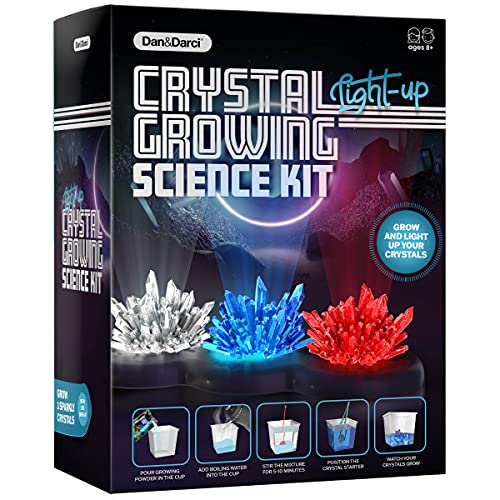
| National Geographic Mega Crystal Growing Kit | Patient kids who like minerals | Kivios lists it as a crystal-growing option | Results take days; messy |
How to Choose for a 7-Year-Old
Age labels versus real readiness
Packaging says ages 6 and up, 8 and up, or 8 to 12, but the number is only a guide. One reviewer argues that true chemistry kits, where you measure powders and pour on a timer, really begin around age 8 and need an adult close by. Another notes that a 7-year-old will need help reading the instruction booklet. If your child reads well and has done craft projects before, an 8+ kit can work. If they get frustrated easily, a kit designed for ages 4 to 7 with two-step experiments is gentler.
Topic: one subject or a sampler
A sampler kit offers volcanoes, slime, crystals and simple physics so you can find out what your child enjoys. A focused kit, such as Snap Circuits, dives deep into one subject. Samplers are a good first purchase. Focused kits suit a child who has already shown interest in how things work.
Mess and space
Reviewers warn that some kits are messy, with powders, liquids and colouring that can stain. Plan to do the experiments on a wipeable surface, with a tray and old clothes. Snap Circuits is neat by comparison but spreads across a table while in use.
Safety
Read the maker’s age grading and safety notes before use. Wear eye protection if the kit supplies it, keep chemicals away from the mouth and eyes, and store small parts away from younger siblings. Where a kit includes crystals, powders or batteries, follow the instructions exactly and supervise throughout. If a child swallows a chemical or a battery, seek urgent medical advice.
The Main Options in More Detail
National Geographic Science Magic Kit
Truth in American Education names this its best choice for 7-year-olds, listing more than 100 experiments and magic tricks and a wand and gloves in the box. Kivios also puts it at the top of its general list. The appeal is that experiments are framed as tricks, which holds the attention of kids who like an audience. The trade-off is that the “why” behind each trick can be thinner than the “wow”, so an adult who explains the science makes the kit more valuable.
Doctor Jupiter kits
The My First Science Kit is recommended by one review for 7-year-olds, citing more than 100 age-appropriate experiments and safety standards. A second review calls the Ultimate Science Kit its best premium pick for guided learning. Both are structured, with step-by-step instructions, which suits parents who want a curriculum feel without planning anything. Because these sets are large, a box or bin for storage is worth having.
UNGLINGA kits
Kivios picks the UNGLINGA 70 Lab Experiments kit as best for ages 7 to 9, mentioning a volcano, crystal growing, a balloon rocket and fruit circuits. A different review says the UNGLINGA 272 Experiments Kit gives the lowest cost per activity. These are the choice for families who want variety and are comfortable with some experiments being simpler than others. Because quality can vary across a huge number of activities, treat a single outlet’s praise as a starting point, not a guarantee.
Snap Circuits
Snap Circuits is the electronics pick. Parts snap together on a base grid, so there are no tools and no soldering. Halt Mal ranks the Classic SC-300 as its top pick, while Kivios says the Jr. SC-100 is rated 8+ but works from age 5. One parent reviewer reported that a Lights set kept both a 7-year-old and a 10-year-old engaged for hours. This is a long-lasting toy rather than a one-afternoon kit, and the parts can be reused many times. Check the battery requirements on the box before you buy.
Melican and household-item kits
The Melican 60+ activity kit is named a budget pick, with activities that use common household items. Reviewers say it suits ages 4 to 7 well, because experiments are simple and use safer materials. If your child is closer to 7 and keen, it may feel easy, but it keeps the stress low for a first kit.
Crystal growing
The National Geographic Mega Crystal Growing Kit is listed by Kivios as a crystal option. Crystal kits teach patience: you mix solutions, wait, and watch crystals form over days. They suit kids who like collecting and displaying results. Expect some mess when you prepare the solutions, and keep the display away from pets and toddlers.
Budget Tiers
| Tier | Typical choice | What to expect |
|---|---|---|
| Budget | Melican 60+ activity kit, UNGLINGA 272 Experiments | Many simple activities, household materials, variable instructions |
| Mid-range | UNGLINGA 70, National Geographic Science Magic Kit, Snap Circuits Jr., crystal kit | Better-organised instructions, recognisable brands, a clear theme |
| Premium | Doctor Jupiter Ultimate, Snap Circuits Classic | Large, structured sets with long-term play value |
Pick X If …
| Pick this | If your child … |
|---|---|
| National Geographic Science Magic Kit | loves tricks, shows and performing for family |
| Doctor Jupiter My First Science Kit | needs clear, guided steps and a gentle start |
| UNGLINGA 70 | wants volcanoes, crystals and rockets in one box |
| Snap Circuits Jr. | likes building and lights, and you want less mess |
| Melican 60+ | is younger or easily frustrated, and you want a low-risk first kit |
| Crystal growing kit | is patient and likes collecting |
Tips for Getting the Most From Any Kit
- Read the experiment together first, and gather every item before starting.
- Cover the table, and keep paper towels and a bin nearby.
- Ask your child to predict what will happen, then compare with the result.
- Let them repeat an experiment with one change, since that is how real investigations work.
- Keep unused chemicals and small parts in their original containers, out of reach of little ones.
Alternatives to a Boxed Kit
- Magnifier and nature kit: A bug viewer, magnifier and notebook turns a garden walk into fieldwork.
- Simple building sets: Gear, marble-run or basic engineering sets build physics intuition without chemicals.
- Kitchen experiments: Baking-soda volcanoes, floating and sinking tests, and rainbow density columns need only pantry items and adult supervision.
Frequently Asked Questions
Is a 7-year-old too young for an 8+ science kit?
Not necessarily, but they will need an adult nearby. Reviewers say the main issues are reading the instructions and handling measured steps. A confident reader with supervision can manage many 8+ kits, while a child who gets frustrated may prefer a simpler set.
What is the best science kit for a child who likes building?
Snap Circuits is the one reviewers name most often for building projects, with parts that snap together and no tools. It teaches basic circuits through lights, sounds and switches. The Jr. version is described as workable from a young age, and the Classic offers more projects.
Are science kits safe for 7-year-olds?
They are designed for children when used as directed, but they still need supervision. Follow the maker’s age grading, use any supplied eye protection, and keep powders and batteries away from mouths. Seek medical advice promptly if something is swallowed or gets in the eyes.
How many experiments do I need?
More is not always better. A kit with 60 to 100 well-explained activities is often enough, because few children complete them all. Look at the variety and quality of the instructions rather than just the headline number.
Can these kits be shared with a younger sibling?
Some simple kits suit ages 4 to 7, but many include small parts and powders that are unsuitable for toddlers. If a younger child will be around, supervise closely and store the contents securely after each session.
Will the kit make a mess?
Chemistry-style and crystal kits can be messy, so use a tray or wipeable table. Electronics kits are tidier but take up space. Reviewers suggest setting aside a dedicated spot and keeping cleaning supplies close.



Write Your Review
No reviews yet. Be the first to share your experience!