

Key takeaways
- Cooperative board games remove the loudest argument at the table: nobody is trying to win against anyone else.
Cooperative board games remove the loudest argument at the table: nobody is trying to win against anyone else. Instead the whole group faces the game itself, whether that is monsters at the castle gate, a plane that needs landing, or a labyrinth that is slowly going dark. The catch is that “cooperative” covers a huge range, from a path-building game for five-year-olds to an expert-level strategy game that can occupy adults for an entire evening. Choosing well means being honest about player count, age, and how much rule-reading the group will tolerate.
This guide is written for families looking for a game night that avoids sibling rivalry, couples who want a two-player puzzle, and groups of friends who prefer to beat the game together. Every detail comes from the listed titles, which name age ratings, player counts, and themes. Playing time, complexity, and component quality should be confirmed on the listing. In 2026 the genre is crowded with strong titles, so the useful comparison is by player count and age, then by theme.
One more thing to settle early is the tolerance for losing. Cooperative games are designed to be hard, and a group that dislikes repeated defeats may prefer a gentler title, while a group that enjoys a challenge will be drawn to the harder ones.
Quick Picks
Our top picks




As an Amazon Associate we earn from qualifying purchases at no extra cost to you.
| Product | Best for | Key spec from the title |
|---|---|---|
| Castle Panic 2nd Edition | Family game night | Ages 8+, 1 to 6 players, tower defense |
| Spirit Island | Experienced strategy players | Expert-level, solo or multiplayer, for adults |
| Sky Team | Couples and two-player nights | Ages 12+, 2 players, dice placement |
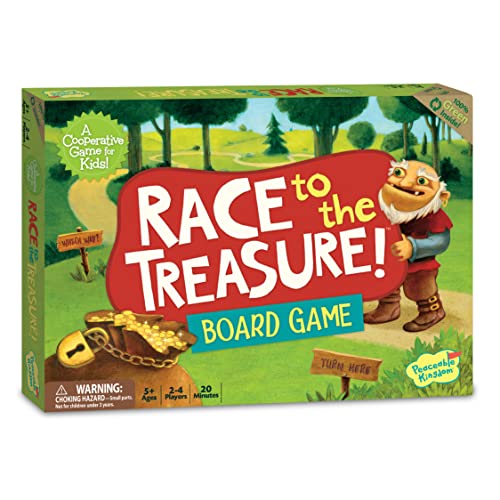
| Race to the Treasure! | Young children | 2 to 4 kids, ages 5+, path building |
| The Night Cage | Fans of atmospheric horror | 1 to 5 players, ages 14+, tile laying |
| Flow Cooperative Board Game | Families wanting a flexible group size | 1 to 4 players, ages 8+ |
How to Choose
Player count and solo support
Check the minimum and maximum players first. Sky Team is built for exactly two, while Castle Panic lists 1 to 6, Flow lists 1 to 4, and The Night Cage lists 1 to 5. A game that supports solo play is useful when the household cannot always gather a full table. If the group is usually three or four, avoid games that only work well at two, and confirm on the listing how the game scales at higher counts.
Age rating and complexity
The listed ages range from 5 and up for Race to the Treasure to 14 and up for The Night Cage, with Spirit Island pitched at expert-level adults. Follow the age rating as a guide to rules complexity and theme, not just to small parts. A game that asks a child to track many rules at once may frustrate, while a game too simple may bore a teenager. Mixed-age groups should favor a game at the younger edge with room for optional challenges.
Theme and tone
Fantasy defense, aviation, horror, and nature-based themes all appear in this list. A theme matters because it shapes the table’s mood: Castle Panic is lighthearted and chaotic, Sky Team is tense and quiet, and The Night Cage leans into candlelit unease. If the group includes younger players, check the listing for age guidance before choosing a darker theme, and read the box description for content notes.
Replay value and learning curve
Games with expert-level complexity can offer deep replay but cost an hour or more of rule reading. Lighter titles teach in minutes but may be solved quickly. Look for a title that mentions variable setups, multiple scenarios, or scalable difficulty. Budget-tier cooperative games sometimes cut corners with thin boards or a single scenario, so check the listing for what is included in the box and whether expansions exist.
What to ignore: award badges and “perfect for” tags on a listing say little about how the game plays. Focus on the stated age, player count, theme, and whether the description names a solo mode, since those facts decide whether the box will reach the table more than once. Also be cautious about titles that bundle long marketing text without naming any actual mechanics.
The 6 Best Options
Castle Panic 2nd Edition
Castle Panic is a cooperative tower defense game for ages 8 and up and 1 to 6 players, with a fantasy theme and a family strategy focus. It is the easiest pick for a mixed-age family night. The group defends together and wins or loses together, so no one is singled out at the end. Because the title lists a standalone game, it needs no previous purchase, and a tower defense setup tends to produce good stories afterward.
- Strength: a wide player range of 1 to 6 handles most household sizes.
- Strength: a tower defense theme is quick to explain and visual to follow.
- Trade-off: it leans on luck of the draw, so experienced strategists may find it light.
Skip it if the group wants a deep, planning-heavy challenge.
Spirit Island
Spirit Island is an expert-level cooperative strategy game for solo or multiplayer, in which players defend their land. It is the heaviest game on this list and a favorite among hobbyists. Because the listing calls it expert-level, expect the first few sessions to go into learning the rules. Groups who enjoy planning ahead and discussing options openly will get the most from the experience, while casual players may bounce off the setup and rules time.
- Strength: expert-level depth offers a long run of replay for seasoned players.
- Strength: solo and multiplayer modes both appear in the listing.
- Trade-off: the learning curve is steep, and first games can take a long time.
Skip it if the group is new to modern board games or has limited evening time.
Sky Team
Sky Team is a two-player cooperative dice placement game for ages 12 and up, where players work together to land a plane at one of 20 real-world airports. Communication is limited by design, which is part of the puzzle. The two-player focus means no one is left waiting for a turn, and the dice placement format is easy to picture even before opening the rulebook. Confirm session length on the listing, since the title does not state it, and judge the game by its design rather than by badges in the description.
- Strength: built exactly for two, so it suits couples and parent-and-teen pairs.
- Strength: 20 airports in the title offer varied scenarios.
- Trade-off: it does not support larger groups at all.
Skip it if the usual table has three or more players.
Race to the Treasure!
Race to the Treasure is a cooperative path-building game for 2 to 4 kids ages 5 and up. It is the gentlest option here and aimed at early readers. Because players build a path together instead of racing each other, a group of siblings can play without anyone being singled out as the loser. It is also a handy way to practice taking turns and talking through a shared plan.
- Strength: an age rating of 5 and up makes it the most accessible title in the group.
- Strength: path building teaches planning without heavy rules.
- Trade-off: older kids and adults will find it too simple.
Skip it if the table includes players much older than eight.
The Night Cage
The Night Cage is a cooperative candlelit horror strategy game with tile laying and a labyrinth escape, for 1 to 5 players ages 14 and up. It is the moodiest pick of the six. Lowering the lights suits the candlelit theme, and the escape goal gives each session a clear arc from start to finish. Read the listing’s content notes before bringing it to a table with sensitive players.
- Strength: a solo option plus up to 5 players covers many situations.
- Strength: tile laying makes each labyrinth different from the last.
- Trade-off: the horror theme and age rating make it unsuitable for younger players.
Skip it if the group dislikes dark themes or includes children under 14.
Flow Cooperative Board Game
Flow is a cooperative strategy game for 1 to 4 players ages 8 and up, built around working together to overcome challenges in an adventure. It sits between family-friendly and strategic. For a household that has outgrown very simple games but is not ready for an expert-level box, it can serve as a middle step, and the solo option gives a way to learn the rules before teaching others.
- Strength: an age rating of 8 and up fits families with school-aged kids.
- Strength: solo support is listed, and the group size tops out at four.
- Trade-off: the title gives little about content, so check the listing for how much rule reading is needed.
Skip it if the group regularly exceeds four players.
Which One Fits Your Situation
A family with children aged 8 and up
Castle Panic is easy to teach, plays with up to six, and gives everyone a role. Flow is a second choice if the group tops out at four.
A couple who wants a two-player puzzle
Sky Team is built for two and keeps both players engaged. It is a fine pick for a parent and an older child as well, since the age rating of 12 and up opens it to younger teens.
A family with a five-year-old
Race to the Treasure is aimed at ages 5 and up and 2 to 4 kids, which makes it the natural fit for preschool-aged players.
Hobbyists who want a long strategy session
Spirit Island rewards experienced players with a deep challenge, while The Night Cage gives a more atmospheric, shorter experience for groups of 14 and older. Both reward repeat plays, so they make sense for a regular game group rather than a one-off holiday gathering.
Common Mistakes
- Ignoring the age rating and picking a game with a theme the youngest player is not ready for.
- Buying a heavy strategy game for a casual group that will not read a long rulebook.
- Forgetting that some titles only work at a fixed player count.
- Letting one experienced player dictate every move, which turns a cooperative game into a solo one.
- Skipping a first learning game, when a short practice round would make the real game smoother.
Related guides
- White Elephant Gift Exchange Rules Explained
- Funny Ugly Christmas Sweaters For Women
- How To Host A Tacky Christmas Sweater Party
Frequently Asked Questions
What is a cooperative board game?
Players work as a team against the game, win or lose together. The titles here range from kid-friendly path building to expert-level strategy.
Can cooperative games be played solo?
Several listings name solo play, including Spirit Island, The Night Cage, Castle Panic, and Flow. Check each listing for how solo mode works.
How can a group stop one player from taking over?
Agree on a rule that each player decides their own actions, and use discussion rather than orders. Games like Sky Team limit communication by design. Taking turns as the person who reads the options aloud also helps, and newer players can be given the final say on their own piece or action.
Are these games too hard?
Cooperative games are built to challenge. Start with an easier setting or a lighter title, and treat losses as part of learning. Many groups play the first game openly, with cards face up and advice allowed, then tighten the rules once everyone knows the flow. That approach keeps the first session friendly while still leaving room to raise the challenge later.
More from Amazon
Programs that pair well with the guide above. Offers and eligibility are set by Amazon and may change.
Free shipping on eligible items, Prime Video and more. Eligible new members can start with a free trial.
Start a Prime free trialAudiobooks and podcasts to listen to on the go. Eligible new members can start with a free trial.
Try Audible freeAd-free music streaming. Eligible new subscribers can start with a free trial.
Try Music Unlimited freeA free business account with business pricing and bulk-buying tools for work, shop or home office.
Create a business accountAs an Amazon Associate we earn from qualifying purchases.




Write Your Review
No reviews yet. Be the first to share your experience!