

Key takeaways
- Most backyard play equipment asks for a weekend of assembly and a patch of level lawn, and a climbing dome asks for a little less of both.
Most backyard play equipment asks for a weekend of assembly and a patch of level lawn, and a climbing dome asks for a little less of both. The geodesic frame is a ring of connected triangles, usually metal, that kids scramble over, hang from, and use as a hideout. The decision that matters is not whether a dome is fun, since nearly every child who sees one wants to climb it, but how large a frame fits the yard, how many children will use it at once, and whether extras such as a swing or hammock are worth the added parts.
This guide is written for parents setting up a backyard play area and for caregivers weighing a smaller frame for toddlers against a ten-foot dome for older kids. Details are taken only from the listed titles, which name sizes of 6 and 10 feet, load figures of 800, 880, and 1,000 pounds on some products, and add-ons like a saucer swing or hammock. Anything else, including anchoring, footprint, and age limits, needs checking on the listing. In 2026 the category is full of look-alike frames, so small differences in size and accessories do most of the sorting.
One practical reminder before comparing frames: the dome itself is only part of the project. Budget time for unpacking dozens of tubes and connectors, sorting hardware by size, and enlisting a second adult for the final lift. Boxes for ten-foot frames are long and heavy, so plan delivery access, and decide ahead of time where the packaging and leftover hardware will go once the build is done.
Quick Picks
Our top picks


As an Amazon Associate we earn from qualifying purchases at no extra cost to you.
| Product | Best for | Key spec from the title |
|---|---|---|
| Hurtle 10ft Climbing Dome | Plain, large steel frame | 10 ft, sturdy steel, monkey-bar style |
| Hurtle 6ft Climbing Dome | Toddlers and small yards | 6 ft, steel, toddler-friendly size |
| Hapfan 10ft Dome with Saucer Swing | Mixed-age groups | 10 ft, saucer swing, kids 3 to 12, 800 lbs |
| Gardenature 10FT Dome with Hammock | Lounging and climbing | 10 ft, hammock, 880 lbs, anti-rust metal |
| GVDV 10 FT Dome with Hammock | Highest listed load | 10 ft, hammock, 1000 lb, rust-resistant |
| Eezy Peezy Climber with Top | Indoor and outdoor play | Ages 3 to 6, indoor/outdoor, green |
How to Choose
Size: 6 feet or 10 feet
A 6-foot dome fits smaller yards and younger children, since the climb is shorter and the frame is easier to supervise. A 10-foot dome offers more room for several kids, more rungs, and a taller top, but it needs a larger clear zone and more assembly. Check the listing for the footprint and suggested clearance, and mark the area on the ground before ordering. Do not place a frame close to fences, walls, or tree branches.
Load rating and what it means
Titles that state 800, 880, or 1,000 pounds refer to a total structure rating, not a per-child allowance. Read the listing to see how the load is defined, and respect any limit on the number of children at once. A higher rating can suggest sturdier tubing and joints, but the title does not say, so confirm material thickness and the number of anchors included. Never exceed the manufacturer’s stated capacity.
Accessories: swing, hammock, or none
A saucer swing or hammock adds play value and extra parts. They also add load and wear in one spot, so check how they attach and whether the frame needs to be anchored more firmly. A plain dome is simpler to assemble and maintain. If the yard is small or children vary widely in age, a hammock can serve as a calm spot, while a swing may need extra clearance around the frame.
Surface, anchoring, and supervision
Place the dome on level ground over a soft surface such as wood mulch or rubber mats, and follow the manual for anchoring stakes or ground contact. Adults should supervise play, and children should follow the age range on the listing. Rust-resistant coatings help in wet climates, but metal still needs periodic checks. Inspect bolts after the first week and each season, and follow local guidance on play equipment spacing.
What to ignore: lifestyle phrases such as “jungle gym,” “monkey bars,” or “active play structure” describe the general look rather than specific features, and several titles repeat them. Compare size, stated load, age range, and accessories instead. Budget-tier frames tend to cut corners on tube thickness, coating quality, and the number of included anchors, so those are the details to find in the listing’s description and photos before checking out.
The 6 Best Options
Hurtle 10ft Climbing Dome
The Hurtle 10ft is described as a sturdy steel outdoor dome climber that doubles as a jungle gym and monkey bars. It is a plain, no-frills choice for a backyard with space for a large frame. Kids can climb the outside, crawl inside, and use the top as a lookout, and adults can add shade cloth or a tarp later if the sun is strong. Because the product has no extras, there are fewer moving parts to inspect during seasonal checks.
- Strength: a 10-foot steel build gives room for several children to climb and hang.
- Strength: no swing or hammock parts means a simpler assembly list.
- Trade-off: the title does not state a load rating or age range, so check the listing for both.
Skip it if a swing or hammock is wanted or if the yard cannot spare a large clear zone.
Hurtle 6ft Climbing Dome
Sized down to 6 feet and marketed for toddlers among others, this version fits tight yards and early climbers. It shares the steel dome format with its larger sibling. A frame this size tends to work well on a small lawn or a corner of a patio, where a ten-foot dome would crowd everything else, and it is simpler to assemble in an afternoon with one helper.
- Strength: a smaller footprint suits patios, small lawns, and younger children.
- Strength: a lower top is easier for caregivers to monitor.
- Trade-off: older kids will outgrow it faster than the 10-foot frames.
Skip it if several older children will use the frame together.
Hapfan 10ft Climbing Dome with Saucer Swing
Hapfan lists a 10-foot dome with a saucer swing for kids 3 to 12, a load rating of 800 pounds, a 3D setup video, and a rust-resistant finish. The video is a notable aid for assembly. For a household with an older child who wants to climb and a younger one who would rather swing, the combination keeps both busy in the same spot, which makes supervision easier.
- Strength: a saucer swing adds a second play mode for children who tire of climbing.
- Strength: a wide stated age span of 3 to 12 suits families with a gap between siblings.
- Trade-off: the swing needs extra clearance and adds a wear point to monitor.
Skip it if the yard is small or if the swing would sit too close to a fence.
Gardenature 10FT Climbing Dome with Hammock
Gardenature pairs a 10-foot geometric dome with a hammock and lists support for 880 pounds along with anti-rust metal. It leans toward relaxed play as much as climbing. A child can curl up with a book on top of the structure, or friends can hang out together after a round of climbing, which stretches the useful age range upward. Always follow the manual for hammock weight and the way it attaches.
- Strength: a hammock gives a quiet seat on top of the structure.
- Strength: a listed 880 pound rating sits between the other 10-foot options.
- Trade-off: a hammock changes how weight is distributed, so check that the manual covers its limit.
Skip it if the plan is a pure climbing frame with no lounge feature.
GVDV 10 FT Climbing Dome with Hammock
The GVDV lists 1000 pounds of support, a rust-resistant dome, and a hammock in green and blue. It has the highest rating in the group, at least as stated in the title. Families with several children or frequent visiting friends may find the high listed capacity reassuring, although the rating is no replacement for the manual’s limits on how many children may use the frame at once.
- Strength: the 1000-pound listing is the highest among the products reviewed here.
- Strength: a hammock adds a rest spot and a variation on climbing play.
- Trade-off: a larger rating is only meaningful if the build quality and anchors back it up, so read the listing carefully.
Skip it if cost control matters more than extra capacity.
Eezy Peezy Climber with Top
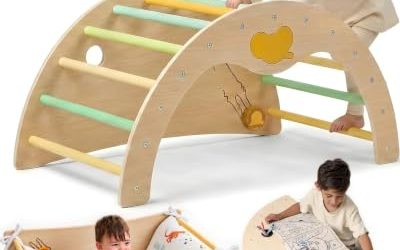
The Eezy Peezy is an active play climbing dome for ages 3 to 6, marketed for indoor and outdoor use. It is the smallest-minded option here, built for younger children. A smaller climber like this can live in a garage, a basement, or on a screened porch, which helps in weather that keeps kids inside, and it is easier to move when the lawn needs mowing.
- Strength: an indoor and outdoor label gives flexibility in where the toy lives.
- Strength: an age range of 3 to 6 sets clear expectations for who should use it.
- Trade-off: the title gives no size or load information, so confirm both on the listing.
Skip it if older children will be the main users.
Which One Fits Your Situation
A small backyard with toddlers
Hurtle 6ft Climbing Dome is the most compact steel frame in the group. Pair it with a soft surface and stay within arm’s reach during play.
A family with children aged 3 to 12
The Hapfan 10ft with Saucer Swing lists the widest age range, and the swing gives younger kids something to do while older ones climb.
A yard where kids like to lounge
Gardenature with a hammock or GVDV with a hammock add a relaxed spot on top of the structure. Choose GVDV if the highest listed rating matters.
A playroom or covered patio
Eezy Peezy Climber with Top is marketed for indoor and outdoor use and for ages 3 to 6, so it fits a flexible space better than a ten-foot frame.
Common Mistakes
- Placing the dome on concrete or hard-packed dirt without a soft surface underneath.
- Ignoring the clear zone around the frame and putting it near fences or tree limbs.
- Reading a load rating as a per-child limit instead of a structure total.
- Skipping bolt checks after the first week and at each season change.
- Letting children climb without adult supervision, especially toddlers on tall frames.
Related guides
- White Elephant Gift Exchange Rules Explained
- Funny Ugly Christmas Sweaters For Women
- How To Host A Tacky Christmas Sweater Party
Frequently Asked Questions
How much space does a 10-foot dome need?
The listing should state the footprint and suggested clearance. Add open space on all sides, and avoid fences and branches.
Is a climbing dome for toddlers?
Some listings name ages 3 and up, while a 6-foot version is marketed for toddlers. Follow the age range, and stay close during play.
Do domes rust?
Several titles mention rust-resistant or anti-rust metal, which helps, but check the frame periodically. Wipe off moisture and watch for chipped coatings.
Does the dome need to be anchored?
Follow the manual. Anchoring requirements differ between models, and the listing should say whether stakes or ground contact are required. When the instructions mention anchors, use them on the surface type the manual describes, and recheck them after heavy rain or after the ground freezes and thaws.
More from Amazon
Programs that pair well with the guide above. Offers and eligibility are set by Amazon and may change.
Free shipping on eligible items, Prime Video and more. Eligible new members can start with a free trial.
Start a Prime free trialAudiobooks and podcasts to listen to on the go. Eligible new members can start with a free trial.
Try Audible freeAd-free music streaming. Eligible new subscribers can start with a free trial.
Try Music Unlimited freeA free business account with business pricing and bulk-buying tools for work, shop or home office.
Create a business accountAs an Amazon Associate we earn from qualifying purchases.





Write Your Review
No reviews yet. Be the first to share your experience!