

Key takeaways
- Family game night has a built-in puzzle: the group is rarely the same age. A seven-year-old, a teenager who would rather be elsewhere.
Family game night has a built-in puzzle: the group is rarely the same age. A seven-year-old, a teenager who would rather be elsewhere, and a grandparent with limited patience for tiny print all need to enjoy the same box. That is why the best board games for family game night tend to share a few traits. They explain in a couple of minutes, they let anyone win on a good turn, and they create laughter instead of long silences while someone plans a move. Games that rely on guessing, drawing, or quick answers deliver that mix better than heavy strategy.
This guide is for households planning a weekly tradition or a holiday gathering with several generations at the table. Seven options are compared strictly on what their titles state, such as age floors, player counts, team formats, and included gadgets. Playtime, difficulty, and content details are not always in a title, so check the listing before buying, especially when one of the games includes a microphone or buzzer that might change the volume level of the house. Everything below works best with an adult nearby to keep rules straight and small components out of reach of toddlers.
Quick Picks
Our top picks


As an Amazon Associate we earn from qualifying purchases at no extra cost to you.
| Product | Best for | Key spec from the title |
|---|---|---|
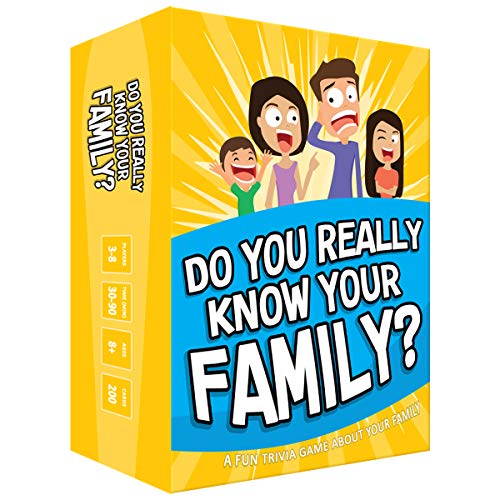
| Do You Really Know Your Family? | Conversation and surprises | Kids 8+ and adults, family edition card board game |
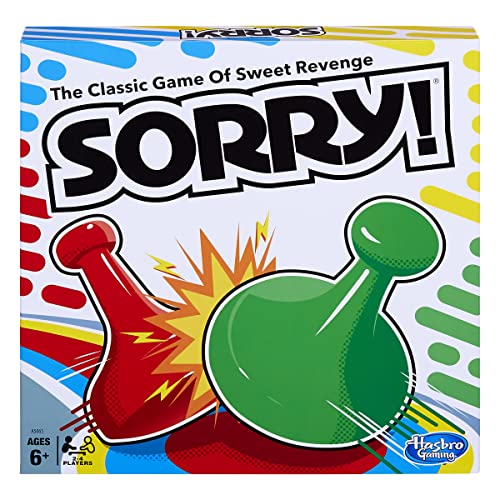
| Sorry! Board Game | Classic racing with a bit of mischief | Ages 6 and up, 4 pawns each |
| Family Feud Deluxe Buzzer Edition | TV-style trivia energy | Buzzer with lights and sound |
| Mattel Pictionary | Team drawing contests | Ages 8+, 2 teams |
| BLANK SLATE | Word association across ages | Party game of predictions, all ages |
| Grab The Mic | Silly karaoke-style rounds | 2 to 12 players, ages 8+, foam mic |
| Clue | Mystery fans who like deduction | Ages 8+, 2 to 6 players |
How to Choose
Check the age floor against the youngest player
The minimum age in a title is the quickest filter. Sorry! lists ages 6 and up, Pictionary, Clue, and Grab The Mic list ages 8+, and Do You Really Know Your Family lists kids 8+. If the youngest player is under six, partner them with an adult as a team, or choose a game with simple actions. When a title does not state an age, as with BLANK SLATE, read the listing’s grading before deciding it suits a younger reader.
Count the seats and the teams
Games differ widely in how many people they hold. Clue lists 2 to 6 players, Grab The Mic lists 2 to 12, and Pictionary uses two teams, which means almost any group size can play by splitting up. Family gatherings with ten or twelve people are best served by team formats or larger player ceilings. A game that tops out at four players leaves cousins and grandparents watching, which is an easy way to lose the room’s goodwill.
Teams also solve the problem of mismatched skill. Pairing a younger child with a grandparent, or a teenager with a parent, evens out reading, drawing, and trivia strengths. Rotating the pairs between rounds keeps the same people from always winning, and it nudges everyone to talk to relatives they might not sit beside at dinner. Games that allow a flexible number of teams, or that simply count points for whoever guesses first, adapt easily when a late arrival joins midway.
Think about volume and mess
Some games bring noise: a buzzer that lights up and sounds off, a foam microphone, a table full of shouted drawings. That noise is part of the charm for some families and a problem for others, especially in apartments with thin walls or when a baby is asleep nearby. Quiet options such as Clue and Sorry! suit calmer evenings. Match the energy of the game to the time of day and the mood of the group. Snacks matter too: games with many small cards or pencil-and-paper play do not mix well with greasy fingers, so keep a wipe or napkin station nearby, and keep drinks away from the board.
Mix chance and skill
The ideal family game gives children a real chance against adults. Dice and card-draw games like Sorry! add luck, while word and prediction games like BLANK SLATE reward creativity instead of knowledge. Heavy strategy tends to favor the oldest player and can lead to frustration. Budget editions use thinner boards and cards, which matters when small hands shuffle them hundreds of times, so look for sturdy components or plan to replace tattered pieces. A premium edition with heavier components lasts longer, while a budget version is fine for a game that only comes out a few times a year. Whatever the tier, store boxes flat and keep rubber bands or small bags handy so cards and tokens stay together.
The 7 Best Options
Do You Really Know Your Family?
This family edition game is pitched at kids 8+ and adults, built around questions that reveal how well relatives know one another. Answers often surprise everyone, which is the point.
- Strength: it starts conversations that carry on after the game ends.
- Strength: the format is accessible to both children and adults.
- Trade-off: it depends on family participation, so it is less fun with strangers.
Skip it if the group is mostly guests who barely know each other. It is at its best with parents, siblings, and cousins who share years of inside jokes, since the surprises come from comparing guesses with real answers.
Sorry! Board Game
Hasbro’s classic race game is listed for ages 6 and up, with each player getting four pawns. Cards decide moves and set up the infamous bump-back that sends an opponent home.
- Strength: simple rules that younger kids can follow.
- Strength: luck keeps the outcome open until the end.
- Trade-off: sending others back can sting the more sensitive players.
Skip it if the group prefers a cooperative or creative game. Families can soften the competitive edge by agreeing on a house rule, such as limiting bump-backs for the youngest player, before the first card is flipped.
Spin Master Games Family Feud: Deluxe Buzzer Edition
This edition brings the TV format home, with a buzzer that has lights and sound, and a goal of guessing the most popular survey answers. It suits groups that like a game-show vibe.
- Strength: the buzzer adds drama and fast energy.
- Strength: it works well for teams of family members against each other.
- Trade-off: the buzzer noise may be too much for some households.
Skip it if quiet evenings are the norm or if competitive teams tend to argue. A designated host who reads the questions keeps the pace brisk and avoids confusion about whose turn it is to buzz in.
Mattel Pictionary
Pictionary is the classic drawing and guessing game for ages 8+ with two teams, billed for family game night. The title also hints at a catch that sets this edition apart, so the listing is worth reading for what that twist is.
- Strength: team play scales across group sizes.
- Strength: drawing skill matters less than laughter.
- Trade-off: it needs space for drawing surfaces and enough pens.
Skip it if anyone dislikes being put on the spot while drawing. Keeping a timer nearby and allowing silly stick figures helps nervous artists relax, and the result is usually more laughter than frustration.
BLANK SLATE
BLANK SLATE is a party game of predictions, where players try to write the same word as others in response to a prompt. It is listed as suitable for all ages.
- Strength: matching words rewards thinking like the group.
- Strength: rounds are short and easy to teach.
- Trade-off: it is best with several players, since matches get rare in tiny groups.
Skip it if only two people will play regularly. It is a good gateway for relatives who claim not to like board games, since the mechanics fit in a single sentence and nobody needs to memorize anything.
Grab The Mic Karaoke Party Game
Grab The Mic comes with a foam microphone and 120 word cards covering 250 words, for 2 to 12 players ages 8+. Players sing or perform clues while others guess.
- Strength: the player ceiling of 12 covers large gatherings.
- Strength: no singing talent is required, and silliness is the goal.
- Trade-off: noise levels are high, and shy players may need coaxing.
Skip it if the group has a baby sleeping or a very reserved crowd. Hosts can ease people in by letting a confident relative go first, which makes it easier for others to join in.
Clue
Clue is the reimagined detective classic for ages 8+ and 2 to 6 players, built on mystery and deduction. Players move through rooms and narrow down who did it and where.
- Strength: deduction suits older kids and adults who like logic.
- Strength: it plays with as few as two people.
- Trade-off: note-taking may be tedious for younger players.
Skip it if the youngest player is under eight and the group wants fast action. Teaming up a younger child with an adult on one detective sheet is a gentle way to include them without slowing down the table.
Which One Fits Your Situation
A multigenerational holiday gathering
Pictionary, with its two-team format, scales to a crowd and keeps grandparents involved by letting them guess while others draw.
A quiet Sunday with younger kids
Sorry! is the sensible pick for children as young as six, and a parent can help the youngest player manage the pawns.
A rowdy cousins weekend
Grab The Mic, with its 2 to 12 player range and foam microphone, fits large noisy groups. Family Feud with the buzzer is the other noisy choice.
Mystery lovers and thoughtful teens
Clue gives teenagers something to think about, while BLANK SLATE lets everyone join with one-word answers.
Common Mistakes
- Choosing a game without checking the youngest player’s age floor.
- Picking a four-player game for a family of eight.
- Ignoring noise levels in homes with thin walls or sleeping children.
- Forcing a competitive game on a group that dislikes losing.
- Skipping a quick rules recap, which stalls the first round.
- Letting one dominant player run every game, rather than rotating who picks the title.
Related guides
- White Elephant Gift Exchange Rules Explained
- Funny Ugly Christmas Sweaters For Women
- How To Host A Tacky Christmas Sweater Party
Frequently Asked Questions
Which game works best for a wide age range?
Team-based and prediction games, like Pictionary and BLANK SLATE, handle mixed ages well. Always check the listed age grading.
How long does a typical family game night last?
Most party games finish in under an hour, while deduction games may run longer. Plan one main game and one short backup, and let the youngest players pick the opener so they stay invested for the rest of the evening.
Are noisy games a bad idea at home?
Not necessarily, but it helps to match the time of day and the household. Choose quieter games like Clue for late evenings.
Is it worth buying a new game each year?
A small, rotating shelf keeps the tradition fresh. In 2026, a mix of classics and one newer game is a reasonable balance.
More from Amazon
Programs that pair well with the guide above. Offers and eligibility are set by Amazon and may change.
Free shipping on eligible items, Prime Video and more. Eligible new members can start with a free trial.
Start a Prime free trialAudiobooks and podcasts to listen to on the go. Eligible new members can start with a free trial.
Try Audible freeAd-free music streaming. Eligible new subscribers can start with a free trial.
Try Music Unlimited freeA free business account with business pricing and bulk-buying tools for work, shop or home office.
Create a business accountAs an Amazon Associate we earn from qualifying purchases.




Write Your Review
No reviews yet. Be the first to share your experience!