

Key takeaways
- Toys for a one year old have a short shelf life of attention. A baby who spent a month banging a block on the floor suddenly wants to push something.
Toys for a one year old have a short shelf life of attention. A baby who spent a month banging a block on the floor suddenly wants to push something across the room, drop balls through a tube, or flip a card and hear a word. The real question behind “best toys for 1 year old” is which play patterns your child is about to hit next, and which toys will survive being thrown, chewed, and carried from room to room.
This list is for parents and caregivers building a small toy rotation rather than a mountain of plastic. It covers six toys that each target a different skill: large stacking cubes, a ball-drop tower, talking flash cards, a farm playset, a push-along popper, and press-and-go cars. Every comparison below leans on what the listing titles say about ages, piece types, and play style, so you can match toy to temperament and plan a rotation that keeps floor time interesting through 2026.
Quick Picks
Our top picks


As an Amazon Associate we earn from qualifying purchases at no extra cost to you.
| Product | Best for | Key spec from the title |
|---|---|---|
| Magnetic Building Blocks (Large) | Stacking and early building | 1.65 inch cubes, toddlers 1-3 |
| Kidoozie Whirl ‘N Go Ball Tower | Visual tracking and cause-and-effect | Ball drop, spiral and pop out |
| Airbition Talking Flash Cards | Early words and speech practice | 224 words, ages 1-4, pocket size |
| Fisher-Price Little People Farm | Pretend play and animal sounds | Smart Stages content, ages 1+ |
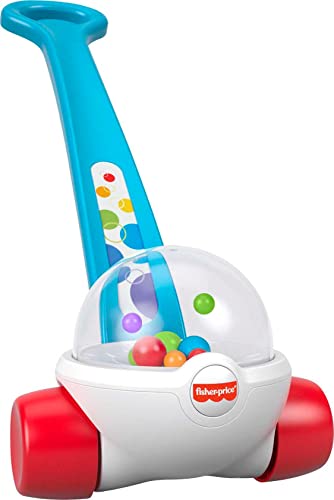
| Fisher-Price Corn Popper | Walkers who like to push | Push-along, ball-popping action |
| soi-meme Press and Go Cars | Floor play with simple mechanics | 4 pack, push down action, CPSC certified |
How to Choose
Match the toy to the skill your child is working on
A child who just started pulling up benefits from a push toy that moves with them, while a sitter who loves dropping things will enjoy a ball tower. Early talkers can use a card deck, and busy hands may prefer blocks. Choose one toy per skill rather than five of the same type, because a varied shelf gets used more than a pile of duplicates.
Check the age label and the part sizes
Look for an age label that starts at 12 months or 1 and up. For blocks and balls, the dimensions matter: pieces should be large enough that they cannot pass through a toilet-paper-tube sized test, which is the standard small-parts rule of thumb. A listing that states large cubes, such as the 1.65 inch stacking cubes in this guide, is a good sign, but still read the full safety wording.
Think about noise, batteries, and portability
Electronic toys can be loud, and batteries die at awkward moments. Toys with simple mechanics, such as friction cars and ball towers, never run out of power. A pocket-size set of cards or a compact block set also travels well to restaurants, waiting rooms, and long car rides, which is where a one year old’s patience runs thinnest.
What to ignore and where budget toys cut corners
Ignore claims that a toy accelerates development; the listings can only describe skills a toy gives a chance to practice. At the budget end, shortcuts show up as thin plastic, rough seams, weak magnets or sticky parts, and unclear age labels. A toy from an established toy brand or one that states a safety certification is less likely to leave you guessing.
The 6 Best Options
Magnetic Building Blocks (Large, 1.65 Inch)
These large stacking cubes are built for small hands that cannot manage tiny bricks. The title lists 1.65 inch magnetic cubes for toddlers, with sensory and Montessori positioning and a travel-toy angle. For a one year old, the early game is simply stacking, knocking over, and clicking cubes together.
- Strength: the large cube size suits toddler grip better than mini bricks.
- Strength: magnetic connection rewards experimenting with building without needing precise pressing.
- Trade-off: building toys need adult help at the start, and cubes will be dropped and scattered.
Skip it if you want a toy that entertains by itself with lights or music. It is also a weaker match for a household with older siblings who might borrow cubes for their own projects, since large toddler pieces and small hobby pieces should never share a play area.
Kidoozie Whirl ‘N Go Ball Tower
This ball drop toy leans into one of the favorite habits of this age: dropping things and watching them go. The title says a ball drops, then spirals, whirls, and pops out below, supporting visual tracking and motor practice. Babies who like to repeat actions get plenty of repetition from a ball track.
- Strength: it encourages eyes following the ball and hands reaching to catch it.
- Strength: no batteries are mentioned, so play depends entirely on the child.
- Trade-off: balls can roll away and may get lost under furniture.
Skip it if you have limited floor storage or a household where pets will chase the rolling balls. It also asks for a bit of patience from adults, because the first few sessions usually involve a parent demonstrating the drop before the child copies it. Once the habit clicks, expect the same ball to be dropped dozens of times in a row, which is exactly the repetition this age needs.
Airbition Talking Flash Cards
This one is the language-focused pick. The title lists talking flash cards for ages 1 to 4 with 224 English words, Montessori learning, and a pocket speech therapy style. Because the range goes to age 4, the deck can keep working as vocabulary grows, which stretches value over time.
- Strength: 224 words gives a large pool of vocabulary to cycle through.
- Strength: the pocket format makes it a natural travel and waiting-room toy.
- Trade-off: it is a screen-free but electronic-style toy, and a one year old may mostly press and flip at first.
Skip it if the child is not interested in repetitive word play or you prefer purely physical, screen-free toys. Families who want a very simple toy with no electronics should also look elsewhere in this list.
Fisher-Price Little People Caring for Animals Farm
A farm playset is a gentle step into pretend play. The title lists a toddler learning toy with Smart Stages content, educational music, and pretend play, for ages 1 and up. Familiar brand names like Fisher-Price tend to reassure first-time buyers about age fit and safety labeling.
- Strength: the Smart Stages content grows with the child by introducing new responses over time.
- Strength: animal and farm themes work for naming, sounds, and stories.
- Trade-off: music and sounds mean it is not the quietest option in the house.
Skip it if you want a battery-free, open-ended toy.
Fisher-Price Corn Popper
The classic push toy suits children who just started walking and want something to lean on. The title lists a blue push-along toy with ball-popping action, aimed at developmental play for infants ages 1 and up. Pushing a toy with a visible reaction is a straightforward motivator for early steps.
- Strength: the ball-popping action gives instant feedback while the child walks.
- Strength: push-along design suits early walkers and cruisers.
- Trade-off: it needs open floor space, and carpet slows the rolling action.
Skip it if the child is not yet pulling up or if your home is tight on open floor. A push toy with wheels also needs a flat, clear path, so homes with lots of thick rugs or stair gates in the main living area may find it frustrating.
soi-meme 4 Pack Press and Go Cars
This multipack is the budget-friendly way to keep floor play going. The title lists four press-and-go cars for toddlers aged 1 to 3 with an easy push-down action, CPSC certification, and a cause-and-effect learning angle. Four cars mean sharing is easy and storage is simple.
- Strength: the push-down action is easy for small hands to repeat.
- Strength: the title states CPSC certification, which is a helpful signal for age-appropriate safety.
- Trade-off: cars are small and easy to lose under furniture.
Skip it if you want a toy with lights, sounds, or a bigger play area. Parents of children who still mouth every object should also hold these back for a few weeks, since small vehicles suit a child who has moved past the heavy mouthing stage.
Which One Fits Your Situation
Your baby just started walking
The Fisher-Price Corn Popper is the natural choice. It gives a walker something to push and a reason to keep moving across the room.
You need something for travel or waiting rooms
The Airbition Talking Flash Cards are pocket size, and the soi-meme Press and Go Cars are compact enough for a diaper bag. Either one keeps hands busy without a tablet.
You want a gift that grows into pretend play
The Fisher-Price Little People Farm introduces animals, sounds, and simple stories. It is a safe pick if you are buying for a family that likes branded, well-known toys.
You like open-ended building toys or need a rainy-day shelf
The Magnetic Building Blocks are the best fit, with the Kidoozie Ball Tower as a companion for a child who likes to drop, track, and repeat. Pair the tower with the soi-meme cars for a mix of sitting play and chasing play when the whole day is spent indoors.
Common Mistakes
- Buying only loud electronic toys, then discovering that quiet play was what the household needed.
- Ignoring part size and age labeling on sets with balls, cubes, or small figures.
- Expecting a toy to hold attention for long stretches; a one year old may play for only a few minutes at a time.
- Putting all toys out at once instead of rotating a few, which lowers the novelty of each.
- Skipping supervision for toys with magnets or small pieces, especially during the first few play sessions when the child is still learning what the toy does.
Specs and Terms Explained
Age grading
The age on a toy box is a safety and development signal, not a promise about how clever your child is. For a one year old, look for labels that cover children under three, because toys meant for older kids are allowed to carry small, sharp, or magnetic parts. A “3+” label is a warning, not a challenge.
Small parts
Toys for children under three are expected to have no loose piece that fits inside a small-parts cylinder, which is roughly 1.25 inches wide. A bathroom tissue tube is the usual household stand-in. If a ball, wheel, or figure slips all the way in, it belongs on a high shelf until your child is older.
Battery doors
Electronic toys for this age group commonly secure the battery compartment with a screw. That detail matters for something like talking flash cards, since button cells and loose batteries are a real swallowing hazard. If the door pops open with a thumbnail, keep the toy away from unsupervised play.
Sealed magnets
Magnetic building pieces are only reasonable for toddlers when the magnets are locked inside thick, large shells. Large pieces such as the 1.65 inch blocks are easier to handle and harder to mouth, but inspect them periodically for cracks or gaps in the seams.
Setup and Care Tips
- Wipe plastic toys such as the ball tower and the corn popper with a damp cloth and mild soap, then air dry. Avoid soaking anything that holds batteries or a sound module.
- Rotate three or four toys at a time and store the rest. Babies at this age often return to a toy with fresh interest after a week away.
- Offer the cars on a hard floor for the first sessions. Press-and-go cars generally need a smooth surface, and carpet can frustrate a child who has just discovered the cause-and-effect trick.
- Run a quick check each week for cracked plastic, loose wheels, or rough edges on the farm pieces, and retire anything that breaks.
- Take batteries out of flash-card toys that sit unused for a long stretch to avoid leakage.
Who Should Skip These
- Households that dislike electronic sound: the talking flash cards repeat words by design, and some parents find that grating after a few days. A quiet shelf of stacking and popping toys suits you better.
- Homes with older siblings who own small-part sets: the little cars and farm figures can end up mixed into the wrong toy bin. Keep them in a separate, labeled container.
- Parents of a baby who still mouths everything: start with larger, chunkier pieces and leave the smaller figures until chewing settles down.
Related guides
- White Elephant Gift Exchange Rules Explained
- How To Host A Tacky Christmas Sweater Party
- Ugly Christmas Sweaters For Adults
Frequently Asked Questions
How many toys does a one year old need?
A small rotation of about five to eight toys across different skills is usually enough. Swap them out every week or two to keep each one feeling fresh. Storing the extras out of sight, in a closet or a bin, makes a returning toy feel new without spending anything.
Are magnetic blocks safe for toddlers?
Large cubes designed for toddlers are different from tiny magnets. Check the size and the safety wording on the listing, and never leave a young child alone with any magnetic toy.
Do talking cards help with speech?
They give a child a chance to hear and repeat words, but they work best alongside real conversation. The listing for the Airbition set describes a 224-word deck, which provides variety.
What does CPSC certified mean on a toy listing?
It indicates the product is stated to meet U.S. Consumer Product Safety Commission requirements for children’s products. Read the full product page for details, since the label is only one piece of the safety picture.
Write Your Review
No reviews yet. Be the first to share your experience!