

Key takeaways
- A first birthday gift is an odd shopping problem. The child will not remember it, the parents will live with it for months.
A first birthday gift is an odd shopping problem. The child will not remember it, the parents will live with it for months, and the toy has to survive a person who is still learning that objects go in mouths, off high chairs, and across rooms. The question behind “best gifts for 1 year old” is really about fit: does it match a baby who is just starting to pull up, cruise, bang, stack, and point, and does it earn floor space in a home that already has a pile of plastic?
This guide is for relatives, friends, and parents buying for a child somewhere around the 12 to 24 month window. It compares six gifts across different play styles: a ride-on, push-and-go cars, a music mat, sensory play food, and two shape-sorting toys. Everything here is judged from the product titles alone, so the focus is on the ages, piece counts, and play types the listings state, plus what buyers should check before wrapping. If you are shopping early for a 2026 birthday party, the guide also flags which gifts are easy to ship, hide, and wrap.
Budget tiers matter here too. A shape sorter sits in the budget range, play food and music mats land in the mid-range, and a ride-on is the premium splurge. Decide which tier you are in before you start browsing, because it narrows the field faster than any other filter.
Quick Picks
Our top picks


As an Amazon Associate we earn from qualifying purchases at no extra cost to you.
| Product | Best for | Key spec from the title |
|---|---|---|
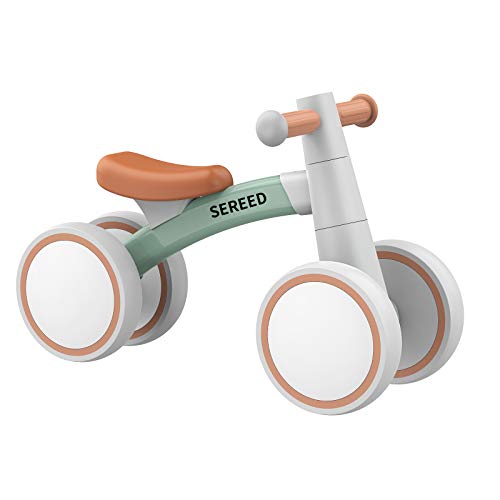
| SEREED Baby Balance Bike | Big first-birthday gift for a mover | 12-24 months, 4 silent wheels |
| iPlay, iLearn Press to Go Cars | Cause-and-effect play on the floor | Push-go friction cars, toddlers 1-3 |
| 2-in-1 Baby Musical Mat | Music and tummy-to-standing play | Piano and drum, 12-18 months |
| hahaland Sensory Play Food | Textures, sorting, and pretend play | 16 pieces, crinkle and rattle |
| Montessori 6-Piece Shape Sorter Cube | Classic problem-solving gift | 6 pieces, 12 months and up |
| kecristv Wooden Montessori Set | Natural-material stacking and sorting | Shape sorter, wooden blocks, ages 1-2 |
How to Choose
Start with the age band printed on the listing
Developmental ranges matter more than the word “baby.” A listing aimed at 12 to 24 months expects a child who can sit steadily and begin walking, while a listing that includes 6 to 12 months leans toward grasping, mouthing, and shaking. Gifts for a child turning one should usually sit at 12 months and up, with room to grow into the toy over the next year rather than being outgrown in two weeks.
Think about size, pieces, and storage
Larger items such as ride-ons need real floor space and often a garage corner, while small sets with a dozen or so pieces need a basket. A set with 16 pieces gives plenty of sorting variety but also more things to lose. If the parents live in a small apartment, a compact toy with a handful of pieces is more welcome than something that sprawls.
Look for material, safety wording, and cleanability
Wood, smooth-edged plastic, and fabric-textured pieces all have different cleaning routines. Check that the listing mentions child-safe construction or relevant certification, and avoid anything with tiny detachable parts for a child who still mouths everything. A toy that wipes clean fast beats one with hard-to-reach crevices after a month of snack-covered hands.
What to ignore and where budget gifts cut corners
Ignore claims that a toy “makes your baby smarter”; no listing can promise that. The cheapest options often cut corners on finish, sound quality, and sturdiness, so a loud electronic toy at the budget end can be tiring for adults and may break quickly. A mid-range gift with simple mechanics usually outlasts a flashy one with batteries and a speaker.
The 6 Best Options
SEREED Baby Balance Bike
This is the gift that makes a statement. The title describes a balance bike for a 1 year old boy or girl, framed as a first birthday gift, with a 12 to 24 month fit, first learning ride-on use, and 4 silent wheels. A ride-on suits a baby who is already cruising and wants to move, and the wheels are described as silent, which matters in a home with wood floors.
- Strength: it targets the 12 to 24 month window directly, so it fits a first birthday.
- Strength: it builds toward ride-on confidence rather than being a one-trick toy.
- Trade-off: it is the largest item here and needs space to ride and store.
Skip it if the child is not yet standing steadily or the home has no room for a ride-on. It is also worth skipping if the family lives in a walk-up apartment, since carrying a bike up stairs gets old quickly.
iPlay, iLearn Press to Go Car Toys
These push-and-go friction cars are made for the floor. The title lists a vehicle set for toddlers 1 to 3 and a 1 year old boy gift, with push-go friction action and a Montessori focus. Pressing down and watching a car zip away teaches cause and effect, which is exactly what this age loves to repeat.
- Strength: the press-and-go action needs no batteries, which keeps it simple.
- Strength: a multi-car set stretches across many play sessions and invites races, ramps, and sharing with siblings.
- Trade-off: cars can roll under furniture, so parents will be fishing them out.
Skip it if you want a toy with lights, sounds, or music. It is also less appealing for a child who is not yet crawling or moving around, since the fun depends on chasing the car.
2-in-1 Baby Musical Mat
For families who love music, this mat combines a piano and a drum into one play surface. The title lists a 2-in-1 musical mat for toddlers aged 1 to 2 and 12 to 18 months, with piano and drum features for babies. Standing and stomping on keys is a natural fit for a child who is gaining balance.
- Strength: the piano and drum combo offers two types of sound exploration in one gift.
- Strength: the mat form lets a child play seated, crawling, or standing.
- Trade-off: musical toys can be loud for the adults living with them.
Skip it if the parents have asked for quiet toys or limited-battery items.
hahaland Sensory Play Food
This pretend-play set mixes sorting with texture exploration. The title lists a 16-piece fruit and vegetable set with color sorting, crinkle, and rattle textures, and mentions Montessori sensory toys for 6 to 12 month babies as well as 1 year olds. Because the content spans multiple ages, it works for a baby who is still mouthing and a toddler who is starting to pretend.
- Strength: 16 pieces give plenty of variety for sorting and naming colors.
- Strength: crinkle and rattle textures keep sensory interest high.
- Trade-off: with 16 small items, keeping track of pieces becomes a chore.
Skip it if you want a single bigger statement gift. It also asks for a bit of parental setup, since pretend play with food shapes works best when an adult demonstrates the pretend part, such as feeding a stuffed animal.
Montessori 6-Piece Shape Sorter Activity Cube
The shape sorter is a classic for a reason. The title calls this a 6 piece shape sorter activity cube, a toddler learning toy for developmental skills, suited to 12 months and up and a 1st birthday gift. It teaches matching, hand-eye coordination, and persistence, because a baby has to turn a shape until it fits the hole.
- Strength: the 12 months and up label fits a first birthday precisely.
- Strength: six pieces are enough to be interesting without being overwhelming.
- Trade-off: the fun is in the problem-solving, and some babies will simply throw the shapes at first.
Skip it if you need a toy that is entertaining without adult help.
kecristv Wooden Montessori Set
For families who prefer natural materials, this wooden option mixes shape sorting with stacking. The title lists a Montessori set for 1 to 2 year old boys and girls, with a shape sorter, wooden blocks, and sensory learning elements. Wooden toys tend to feel substantial, and blocks can grow with a child into stacking, banging, and early building.
- Strength: wooden blocks and a sorter give two play modes in one gift.
- Strength: the Montessori framing suits parents who favor simple, open-ended toys.
- Trade-off: wooden pieces can feel heavy when thrown, so supervised play matters.
Skip it if the home already has several shape sorters. Buyers who want something that lights up or plays tunes will find this set quieter than they expect, which is the point for parents who value calm play.
Which One Fits Your Situation
You want one memorable first-birthday present
The SEREED Baby Balance Bike is the headline gift. It is aimed at the 12 to 24 month range and gives parents something they will actually photograph. Confirm with the parents that there is storage space first.
You are a grandparent buying without checking the toy shelf
Pick the Montessori 6-Piece Shape Sorter Cube. It is compact, label-friendly at 12 months and up, and unlikely to duplicate anything flashy that the family already owns.
The child loves music and noise
The 2-in-1 Baby Musical Mat is the natural match. If the parents are noise-sensitive, the iPlay, iLearn push-go cars deliver activity without a speaker.
You want something screen-free and tactile
The hahaland Sensory Play Food and the kecristv wooden set both fit. The hahaland pieces lean on textures and color sorting, while the kecristv set leans on wood and stacking.
Common Mistakes
- Buying for the age on the box without matching the child’s real stage; a child who is not walking yet needs ride-ons later.
- Ignoring small-parts warnings on sets with many pieces when a younger sibling is in the house.
- Choosing the loudest toy because it demos well, then discovering the parents hide it.
- Buying several similar toys, such as three shape sorters, instead of mixing play types.
- Skipping a gift receipt, which makes swaps awkward if the family already owns the same item.
Safety Labels and Terms Explained
Age grading
A label such as 12 months and up means the maker believes the item is suitable from that age, with supervision where noted. It does not mean the toy is a good fit for every child that age. A baby who is not yet pulling up may find a push toy annoying, while a confident walker may outgrow a floor mat quickly.
Small parts and the cylinder rule
In the United States, toys meant for children under three must not contain parts that fit inside a small parts cylinder, a gauge roughly the width of a toilet paper tube. At home, you can use the tube itself as a rough check. If a piece, a detached wheel, or a broken fragment fits inside, it is a choking hazard.
ASTM F963 and CPSIA
These are the U.S. toy safety standard and the federal law covering lead and phthalates in children’s products. A listing that mentions compliance with them is a good sign, though the claim comes from the seller. Cheap toys with no safety wording at all deserve extra caution.
Non-toxic finishes
Babies mouth everything. Look for water-based paints, sealed wood edges, and fabric that is machine washable or wipeable. Strong chemical smells out of the box are a reason to air the toy out or skip it.
Setup and Care Tips
- Inspect before the party. Remove plastic wrap, twist ties, and loose tags, which are easy to miss under wrapping paper.
- Check battery doors. Safe toys fasten them with a screw. Keep spare button cells and loose magnets out of reach, since swallowing either can be an emergency.
- Clean by material. Wipe wooden pieces with a damp cloth and dry them; do not soak them. Soft items can usually go through a gentle wash, according to the care tag.
- Rotate rather than pile. Offer a few items at a time and swap them weekly. A small rotating selection holds attention longer than a full toy box.
- Re-check old toys. Cracks in wood, loose seams, and peeling paint mean it is time to retire the item.
Who Should Skip These
- Families wanting a toy for a baby who is not yet mobile. A balance bike suits a steady walker, so a younger baby may not use it for months. Floor-based items are a closer match.
- Homes with older siblings. Toys with tiny pieces meant for older children can end up within reach of a one-year-old. Keep those in a separate bin.
- Parents seeking noise-free evenings. Musical mats and press-and-go toys can be loud, so consider volume controls or trial them before gifting.
Related guides
- White Elephant Gift Exchange Rules Explained
- How To Host A Tacky Christmas Sweater Party
- Ugly Christmas Sweaters For Adults
Frequently Asked Questions
What types of toys suit a 1 year old?
Look for toys that support grasping, stacking, sorting, pushing, and simple cause and effect. Shape sorters, push-along cars, sensory sets, and ride-ons all fit that stage.
Are balance bikes appropriate for a first birthday?
Some are made for the 12 to 24 month window, as the SEREED listing says. They suit children who are already cruising or walking and need adult supervision on flat surfaces.
Should a 1 year old’s toys have batteries?
Not necessarily. Battery-free toys such as sorters and friction cars are simpler and quieter, while musical toys add variety. A mix of both is common.
How many pieces is too many for this age?
There is no single number, but small sets of about 6 pieces are easy to manage, and larger sets of 16 pieces require more supervision and storage. Check for small detachable parts and keep the set within the age range on the label.
Write Your Review
No reviews yet. Be the first to share your experience!