

Key takeaways
- Compare the 2 best dual drum sanders with dust extraction ports for November 2026, with dual dust ports and wide sanding capacity for your shop.
Choosing a dual drum sander is a choice about how much sanding you want to finish in a single pass. Two drums let you load a coarse grit on the front drum and a finer grit on the rear, so a panel comes out flattened and smoothed without a second trip through the machine. That only works when dust leaves the cabinet as fast as the drums make it, because a drum sander turns boards into fine dust quickly. The machines below are true dual-drum sanders with built-in dust extraction ports, so dust control is part of the design rather than an afterthought.
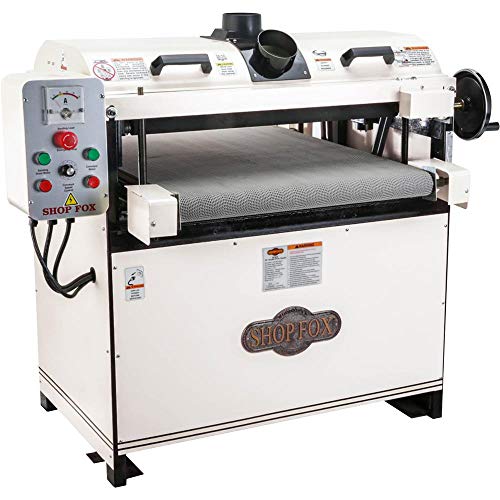

This guide serves cabinet shops, furniture makers, and serious hobbyists who flatten glued panels and wide boards on a regular basis. Both machines below were chosen from Amazon listing names and specifications: the Shop Fox W1678, a 5 HP 26-inch dual-drum sander, and the Powermatic DDS-237, a 7.5 HP 37-inch dual-drum sander.
Quick Picks
Both picks below are true dual-drum machines with two dust ports, so either one keeps panel sanding from filling the shop with fine dust.
As an Amazon Associate we earn from qualifying purchases.
| Product | Best for | Key spec from title |
|---|---|---|
| SHOP FOX W1678 5 HP 26-Inch Drum Sander | High-power 26-inch panel sanding | 5 HP, 26-inch dual drums |
| Powermatic 37-Inch Dual Drum Sander, 7.5 HP, 230V 1Ph (Model DDS-237) | Wide 37-inch production panels | 7.5 HP, 37-inch dual drums |
How to Choose
Drum width and single-pass capacity
Drum width decides how wide a panel you can sand in one pass, and that decides how much time you save. A 26-inch machine handles most cabinet doors, drawer fronts, and small tabletops in a single pass, while a 37-inch machine takes full-width panels and wide glue-ups without turning the board around. Wider drums also let you stagger several narrow pieces across the belt in one pass, which matters when you sand a full set of parts for one project. Measure the widest panel you sand often, then add room for the next project, because a machine that just fits today will feel small within a year. Width also affects floor space, so check the full footprint before you commit.
Dust port size, count, and airflow needs
A dual drum sander makes dust from two drums at once, so extraction matters more here than on any other sander. Look for two dust ports, because each drum needs its own path out of the cabinet, and a single port leaves dust trapped around the rear drum. Check the port diameter against your hoses, since a 4-inch port connects directly to most collectors while a smaller port needs an adapter that can choke airflow. Match your collector to the airflow the maker lists for the machine, because an undersized collector lets dust settle on the belt and the workpiece. Keep hose runs short and straight, and seal any unused opening so suction stays at the drums.
Motor power and electrical supply
Motor power decides whether the drums keep spinning steadily when you feed a wide, dense board. A 3 HP motor copes with light cabinet work, but a 5 HP or 7.5 HP motor holds its speed better on hard maple, white oak, and wide glue-ups, which shows up as a flatter surface with fewer stop marks. Bigger motors demand more from your shop wiring, and both machines run on 220V or 230V single-phase power rather than a standard household circuit. Check the circuit size the listing calls for, and have an electrician fit a dedicated circuit before delivery day. A machine that trips a breaker mid-panel is worse than a smaller machine that runs all day.
Feed control and drum adjustment
Feed control decides how fast stock moves under the drums, and the finish follows. A slower feed gives each grit more time on the wood, which suits dense hardwoods and leveling cuts, while a faster feed suits softwoods and light passes. Look for a variable feed or a two-speed gearbox so you can match the pace to the wood instead of one speed for every job. The rear drum should adjust on its own, because the two grits cut at different depths and the rear drum needs its own setting to track the front drum. Fast paper changes matter, since you will swap grits often, and a hook-and-loop or tool-less system saves time over a full day of sanding.
The 2 Best Options
1. SHOP FOX W1678 5 HP 26-Inch Drum Sander
The Shop Fox W1678 is the workhorse pick for shops that want serious dual-drum capacity without stepping up to a 37-inch production machine. Its 5 HP motor drives two 26-inch drums, so the front drum can cut with a coarse grit while the rear drum follows with a finer one, and a panel leaves the machine ready for finish sanding. Two 4-inch dust ports sit under a hinged hood, and an amp meter on the control panel shows how hard the motor is working. Hook-and-loop paper and a micro-adjustable rear drum make grit changes and fine tuning quick, which matters when you switch between leveling glue-ups and smoothing figured wood.
Specs
- 5 HP motor with 220V power
- Two 26-inch drums with hook-and-loop sandpaper attachment
- Dual 4-inch dust ports under a hinged hood
- Variable feed rate from 0 to 20 FPM
- Drum surface speed of 2,300 FPM and motor speed of 3,450 RPM
- Sands stock up to 26 inches wide and 4-1/4 inches thick
- Minimum board length of 9 inches and minimum board thickness of 1/8 inch
- Amp meter on the control panel shows motor load
- Micro-adjustable rear drum for fine tuning
- Powder-coated paint finish and durable industrial rubber conveyor belt
Best for: Shops that sand 26-inch panels and want strong dual-drum power with a straightforward dust hookup.
Watch out for: It is heavy at around 546 pounds and needs 220V power plus a dedicated spot in the shop.
2. Powermatic 37-Inch Dual Drum Sander, 7.5 HP, 230V 1Ph (Model DDS-237)
The Powermatic DDS-237 is built for production shops that sand wide panels day after day. Its 7.5 HP motor drives two 37-inch steel drums, so full cabinet panels pass through in one go, and the independently adjustable rear drum lets you fine-tune the finish pass without disturbing the front drum setting. A two-speed gearbox gives you a slower feed for dense hardwoods and a faster feed for lighter work, while dual dust ports with directional baffles pull chips and dust away from both drums. The machine arrives with 80 and 100 grit abrasive strips fitted, so it is ready to sand once it is wired and connected to extraction.
Specs
- 7.5 HP motor with 230V single-phase power
- Two 37-inch steel drums for wide single-pass sanding
- Dual dust ports with directional baffles
- Two-speed gearbox for feed control
- Independently adjustable rear drum
- Drum speed of 1,700 RPM
- 80 and 100 grit abrasive strips included, plus handwheel and wrenches
- Weighs 962 pounds
Best for: Production shops sanding full 37-inch panels in one pass.
Watch out for: It is a large, heavy machine that needs 230V single-phase wiring, floor space, and a capable dust collector.
Which One Fits Your Situation
You sand cabinet panels every week
Pick the Shop Fox W1678. Its 26-inch width covers cabinet doors, drawer fronts, and small tabletops in a single pass, and the 5 HP motor has enough muscle for hardwoods without demanding the floor space of a production machine. The dual 4-inch dust ports hook straight to a standard collector, and the variable feed lets you slow down for figured wood. It is the sensible middle ground for a busy cabinet shop.
You run a small production shop
Pick the Powermatic DDS-237. When panels move through the sander all day, the 37-inch width and 7.5 HP motor keep the queue moving, and the two-speed gearbox lets you set a steady pace for each batch. The independently adjustable rear drum means the finish pass stays consistent from the first panel to the last. It is a production tool, so give it the wiring, floor space, and extraction it needs.
You want the widest single-pass capacity
Pick the Powermatic DDS-237. A 37-inch drum sands full-width panels and wide glue-ups without turning the board around for a second pass, which saves time and keeps the surface even across the full width. If your work regularly includes large tabletops, wide doors, or full sheets of glued stock, the extra width pays for itself in fewer passes and fewer seams in the finish.
Your shop shares space with other work
Pick the Shop Fox W1678. Its 26-inch footprint fits a smaller shop far more easily than a 37-inch production machine, and the hinged hood plus dual 4-inch dust ports keep dust contained while you work. The variable feed and hook-and-loop paper changes make it quick to switch between jobs, so it works well when the sander shares the floor with a table saw, assembly bench, and lumber storage.
Common Mistakes
- Buying a single-drum machine when the job calls for two drums, since only a dual-drum sander rough sands and finish sands in one pass.
- Connecting only one dust port and leaving the other open, which splits suction and lets dust settle around the rear drum.
- Taking too deep a cut in one pass, which overloads the motor, scorches the wood, and wears the abrasive out fast.
- Putting the same grit on both drums instead of a coarse grit on the front drum and a finer grit on the rear.
- Forgetting to check the electrical supply, floor space, and collector capacity before a 500-pound machine arrives at the door.
Frequently Asked Questions
What does dual drum mean on a drum sander?
Dual drum means the sander has two sanding drums mounted in line, one behind the other. The front drum usually carries a coarse grit for leveling and stock removal, while the rear drum carries a finer grit for smoothing. A board passes under both drums in a single trip through the machine, so it comes out flattened and finish sanded at the same time.
How many dust ports do these sanders have?
Both sanders in this guide have two dust ports, one for each drum. The Shop Fox W1678 has dual 4-inch dust ports under a hinged hood, and the Powermatic DDS-237 has dual dust ports with directional baffles. Connect both ports to your collector and keep hose runs short so suction stays strong at each drum.
Can I run these sanders on a standard household circuit?
No, both machines need higher-voltage power than a standard household circuit provides. The Shop Fox W1678 runs on 220V power and the Powermatic DDS-237 runs on 230V single-phase power, so each one needs a dedicated circuit of the size the listing calls for. Have an electrician fit the circuit before delivery day to avoid delays.
What grits should I put on the two drums?
Put a coarse grit on the front drum and a finer grit on the rear drum, since the front drum does the leveling and the rear drum does the smoothing. A common pairing is 80 grit on the front drum and 100 or 120 grit on the rear, and the Powermatic DDS-237 arrives with 80 and 100 grit strips fitted. Adjust the rear drum height to match the finer grit.
More from Amazon
Programs that pair well with the guide above. Offers and eligibility are set by Amazon and may change.
Free shipping on eligible items, Prime Video and more. Eligible new members can start with a free trial.
Start a Prime free trialAudiobooks and podcasts to listen to on the go. Eligible new members can start with a free trial.
Try Audible freeAd-free music streaming. Eligible new subscribers can start with a free trial.
Try Music Unlimited freeA free business account with business pricing and bulk-buying tools for work, shop or home office.
Create a business accountAs an Amazon Associate we earn from qualifying purchases.
Write Your Review
No reviews yet. Be the first to share your experience!