

Key takeaways
- Board games are awkward objects. Boxes are heavy, oddly proportioned, and prone to bowing when stacked in tall piles.
Board games are awkward objects. Boxes are heavy, oddly proportioned, and prone to bowing when stacked in tall piles, so ordinary decorative shelving often fails once a collection passes thirty or forty titles. Shoppers hunting for the best board game shelves are really looking for a mix of load rating, shelf depth, and layout that handles both standard square boxes and the oversized ones from big strategy games. The right choice depends on whether the games stand upright like books, lie flat in stacks, or sit in cube cubbies.
This guide covers seven shelving units drawn from the listings, from open bookcases to cube organizers and a plastic utility rack. The comparisons rest on what the titles state: tier counts, cube counts, materials, and in one case a weight rating. Depth, shelf spacing, and per-shelf limits are often left out of titles, so those details need a look on the listing. Heavy furniture should be anchored to the wall according to the instructions, particularly in homes with children.
Quick Picks
Our top picks





As an Amazon Associate we earn from qualifying purchases at no extra cost to you.
| Product | Best for | Key spec from the title |
|---|---|---|
| SUPERJARE Triple Bookshelf | Wide open display of many boxes | 11 open shelves, 4 tier, wide |
| Huuger 5-Tier Bookshelf | Keeping stacks from sliding | 10 open shelves with raised baffle |
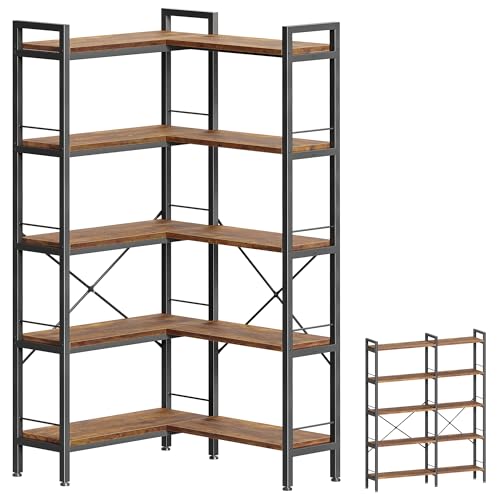
| Huuger L-Shaped Corner Bookshelf | Using an awkward corner | 10 open shelves, 49.4 inch wide, metal frame |
| NUMENN 5-Tier Shelving Unit | Industrial look with wood shelves | Metal frame, falling prevention baffle |
| Mavivegue 18-Cube Bookcase | Square compartments for boxed games | 18 cubes, DIY organizer |
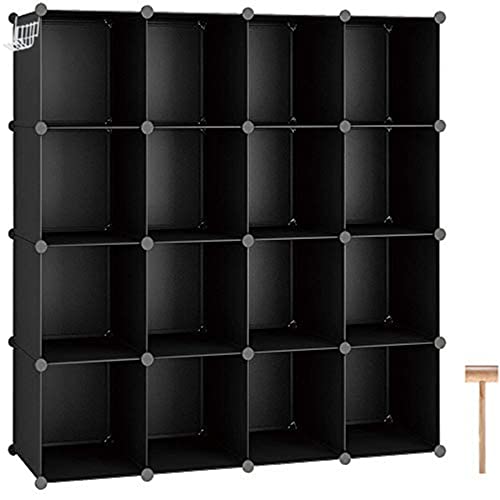
| C&AHOME 16-Cube Storage Organizer | Budget cubby wall | 16 plastic cubes, modular |
| Plano 4-Shelf Plastic Storage Shelves | Garage or closet overflow | 48 x 23 x 14 inches, 200 lb capacity |
How to Choose
Measure the biggest box first
Standard board game boxes run roughly a foot wide, but plenty of big-box titles stretch further, and cubes that measure about the size of a vinyl record sleeve cannot take them. Before buying, pick the three largest boxes in the collection and measure width, depth, and height. Open shelves are more forgiving than cubes, while cubes keep rows tidy only when every box fits. When the listing does not state shelf depth, treat that as a question to answer on the product page.
Collections also grow unevenly, and by 2026 many hobby shelves are already past their original plan. A shelf that looks roomy for thirty games becomes cramped after a single birthday and a holiday sale, so build in a cushion of at least a quarter more space than the current count requires. Expansion packs, dice bags, and card sleeves tend to pile up beside the main boxes, and a spare tier or two keeps them from invading the living room table.
Weight capacity beats appearance
A packed shelf of strategy games weighs far more than the same shelf of paperbacks. The Plano plastic unit lists a 200 lb capacity, an unusually clear number, and the metal-frame units with wooden boards generally handle weight better than thin particleboard. Cube organizers made of plastic panels are light and cheap but can bow under heavy stacks. Where a title gives no rating, look for per-shelf numbers on the listing before loading it up.
A simple test helps here: stack five of the heaviest boxes in the collection on a bathroom scale and note the total. Multiply by the number of shelves planned for that stack height, and compare against any capacity the listing gives. That quick math often shows that a decorative cube unit is fine for light party games but not for a wall of heavy campaign-style boxes, which belong on sturdier boards or a metal-framed unit.
Open shelves versus cubes
Open shelves give flexibility: games can stand on their sides or lie flat, and the height between tiers may adjust. Cubes force a fixed square, which keeps things uniform, but they waste space on slim games. Huuger’s titles mention a raised baffle, and NUMENN lists a falling prevention baffle, features that keep boxes from sliding off the front edge. Those lips matter for flat stacks in homes with kids. Wide open shelves also let box spines face out, which makes finding a specific title faster on game night than digging through a pile.
Stability and room placement
Tall units should be anchored to a wall with the supplied hardware, because top-heavy shelves of heavy boxes can tip. Plan the location so the most-played games sit between knee and shoulder height, and heavy boxes stay low. Budget units generally save money on board thickness and fastener quality, so tighten screws again after a few weeks of use.
Finally, ignore marketing words such as “premium” or “heavy duty” when no numbers follow them. A title that states tier count, cube count, or capacity gives a buyer something to check, while vague adjectives do not. Photos on the listing often show shelves holding a few books and a plant, which is a long way from a load of strategy game boxes, so judge by the stated materials and ratings instead.
The 7 Best Options
SUPERJARE Triple Bookshelf
SUPERJARE lists 11 open display shelves across a wide, four-tier brown bookcase for home or office. That wide span gives room to line up many boxes in a row, with some shelves free for taller items.
- Strength: eleven open shelves give lots of surface area, enough to split a collection into party, family, and strategy zones.
- Strength: the wide format suits a long wall.
- Trade-off: weight rating per shelf is not in the visible title.
Skip it if wall space is limited, since the unit is wide by design. It also asks for patience during assembly, because a wide frame with many shelves usually involves a long hardware list.
Huuger 5-Tier Bookshelf with Raised Baffle
Huuger lists ten open shelves on a five-tier rustic brown bookshelf with a raised baffle. That lip is a plus for stacks of games that tend to slide forward.
- Strength: the raised baffle helps hold stacked boxes.
- Strength: ten shelves allow sorting by player count or genre.
- Trade-off: depth is not stated, so big boxes need a check.
Skip it if the collection leans toward oversized boxes that may overhang. A ruler and one oversized box set the answer in about a minute.
Huuger L-Shaped Corner Bookshelf
This Huuger model uses an L-shape to take over a corner, with ten open shelves, a 49.4 inch straight wide bookcase length, a metal frame and wooden board construction, and adjustable parts.
- Strength: it turns a dead corner into usable storage.
- Strength: metal frame with wooden boards suits heavier loads.
- Trade-off: the L-shape needs more floor space than a straight unit.
Skip it if the room has no corner free or if a simple straight bookcase is preferred.
NUMENN 5-Tier Freestanding Shelving Unit
NUMENN combines a metal frame with wood shelves in a vintage look, adding a falling prevention baffle and open storage suitable for a bedroom or living space.
- Strength: the vintage style blends with industrial decor.
- Strength: the baffle keeps items from sliding off.
- Trade-off: open metal frames offer less side enclosure than a boxed cabinet.
Skip it if a solid cabinet look is the goal. Games stored on open metal shelving also collect more dust, so a periodic wipe-down of box tops becomes part of the routine.
Mavivegue 18-Cube Bookcase
Mavivegue is a black, extra-large 18-cube organizer sold as a DIY build for bedrooms, living rooms, or offices. Each cube becomes a cubby for a game box or two.
- Strength: eighteen cubes create a modular grid.
- Strength: easy to sort by category, with one game family per cube.
- Trade-off: cube size is not in the title, so large boxes may not fit.
Skip it if the collection includes many oversized games. Mixed collections can still use it for small-box card games and travel editions, with big boxes housed elsewhere.
C&AHOME 16-Cube Storage Organizer
C&AHOME lists 16 black plastic cubes in a stackable, modular closet storage design. It is the lighter, lower-cost take on cubes.
- Strength: modular units can be rearranged or stacked differently.
- Strength: plastic panels are light and simple to assemble.
- Trade-off: plastic panels may flex under the weight of many boxes.
Skip it if the shelf will hold dense stacks of heavy games. Plastic cube sets suit lighter, smaller games better, and a few cubes can hold craft supplies or dice trays alongside the boxes.
Plano 4-Shelf Plastic Storage Shelves
Plano lists a 48 x 23 x 14 inch plastic unit with 200 lb capacity, aimed at pantry, office, closet, and garage use. It is utility shelving rather than living-room furniture, but the numbers are clear.
- Strength: the 200 lb capacity is spelled out.
- Strength: 14 inch depth is stated, helping with box fit checks.
- Trade-off: it looks like garage storage.
Skip it if the shelf will sit in a display area where looks matter. It earns its place as the workhorse for overflow that never needs to be on show.
Which One Fits Your Situation
A growing collection in the living room
The Huuger 5-tier with the raised baffle is a safe starting point because it offers many shelves and a lip for flat stacks.
An empty corner in the game room
The Huuger L-shaped corner bookshelf makes use of space that otherwise sits empty.
Archive storage in the basement
The Plano 4-shelf is the practical choice when the shelf needs to carry heavy overflow with a stated 200 lb rating.
Sorting small and medium boxes by genre
The Mavivegue 18-cube makes each cube a category bin, as long as the largest boxes fit. Label the cubes by player count or play time, and game night picking gets quicker. The C&AHOME 16-cube plays the same role at a lighter weight class and a modest cost tier.
Common Mistakes
- Buying cube shelves without measuring the biggest game boxes.
- Skipping wall anchoring on a tall bookcase loaded with heavy boxes.
- Stacking too many heavy boxes on one shelf and ignoring the per-shelf limit.
- Placing shelves where sunlight fades box art over time.
- Putting heavy games on the top tier, making the unit top heavy.
- Choosing shelves by photo alone, without reading the materials, tier count, and any stated capacity in the title.
Related guides
- White Elephant Gift Exchange Rules Explained
- Funny Ugly Christmas Sweaters For Women
- How To Host A Tacky Christmas Sweater Party
Frequently Asked Questions
Should board games stand up or lie flat?
Standing upright protects box corners from stack weight, while flat stacking saves space. Mixing both works if heavy boxes stay low, and a shelf with a raised baffle makes flat stacks safer to keep near the front edge.
Are cube organizers good for board games?
They work for small and medium boxes when the cube interior matches the game dimensions. Check the listing for cube size.
How can shelves be kept from bowing?
Spread weight across tiers and stay within the rated load. Metal frames and thicker boards help, according to the construction listed.
Does the shelf need to be anchored?
Wall anchoring is advised for tall units, particularly with children in the home. Follow the manufacturer’s hardware instructions, use fasteners suited to the wall type, and recheck the connection after loading the shelves with heavy boxes.
More from Amazon
Programs that pair well with the guide above. Offers and eligibility are set by Amazon and may change.
Free shipping on eligible items, Prime Video and more. Eligible new members can start with a free trial.
Start a Prime free trialAudiobooks and podcasts to listen to on the go. Eligible new members can start with a free trial.
Try Audible freeAd-free music streaming. Eligible new subscribers can start with a free trial.
Try Music Unlimited freeA free business account with business pricing and bulk-buying tools for work, shop or home office.
Create a business accountAs an Amazon Associate we earn from qualifying purchases.




Write Your Review
No reviews yet. Be the first to share your experience!