

Key takeaways
- Best stationary thickness planers with dust collection hoods, with two-speed and spiral cutterheads and wide capacities that keep the shop clean.
A thickness planer without dust collection turns a tidy workshop into a blizzard of shavings within a single board, so the buying decision here is really about the chute, hood or port as much as the cutterhead. A machine that throws chips into a bag or a vacuum hose keeps the bed clear, the board visible and the floor walkable, while one that dumps them on the bench forces a stop every few passes. The three planers below were chosen because their Amazon listings state the dust fitting outright, not because a reviewer assumed it was there.


All three are benchtop stationary planers in the same working class, and they split cleanly by cutterhead and width. One is a two-speed thirteen-inch machine with a dust-ejection chute and extra knives in the box. One is a twelve-and-a-half-inch three-knife workhorse whose listing includes a dust hood. The third is a thirteen-inch spiral-head planer with an adjustable dust port for buyers who want quieter, low-tear-out cuts on figured stock.
Quick Picks
As an Amazon Associate we earn from qualifying purchases.
| Product | Best for | Key spec from title |
|---|---|---|
| DEWALT DW735X Thickness Planer | Two-speed planing with a full accessory set | 13-inch three-knife cutterhead with dust-ejection chute |
| DEWALT DW734 Thickness Planer | A proven twelve-and-a-half-inch planer with a dust hood | 12-1/2-inch three-knife cutterhead with included dust hood |
| WEN PL1326 Thickness Planer | Spiral-head planing on figured boards | 13-inch spiral cutterhead with 26 HSS inserts and adjustable dust port |
How to Choose
Cutterhead Type and Finish Quality
Straight three-knife cutterheads cut fast and leave a clean surface on straight-grained boards, and their knives are simple to swap when they dull. A spiral head with staggered inserts shears the wood instead of chopping it, which usually means less tear-out on figured grain and quieter running, though each insert is a separate small edge to rotate when it wears. Decide by the timber you actually buy: straight-grained pine and poplar rarely need a spiral head, while curly maple, knotty oak and reclaimed boards reward one. Do not judge a head by its insert count alone; check whether the listing names the insert material and how the inserts are indexed.
Width, Thickness Capacity and Feed Speed
Width decides the widest board you can plane in one pass, and six inches of thickness capacity covers almost every board a home workshop mills. A thirteen-inch machine takes a wider slab than a twelve-and-a-half-inch one, which matters more than it sounds when you are flattening glued-up panels. Feed speed controls the finish: a slower feed leaves finer knife marks per inch, while a faster feed clears rough stock sooner. Two-speed machines let you rough at one rate and finish at the other, whereas a single-speed planer asks you to accept one compromise for every board.
Dust Collection Fitting
The fitting is the whole point of this roundup, so read the listing literally. A dust-ejection chute throws chips in a fixed direction and pairs with a bag or a hose adapter. A dust hood encloses the outlet and connects to a vacuum hose. An adjustable dust port lets you aim the hose where your extractor sits. Measure your extractor hose before ordering, because a port that needs an adapter you do not own is a stalled project. Also check whether the fitting ships in the box or is listed as a separate accessory, since some sellers show it in photos without including it.
Weight, Tables and Workshop Space
A benchtop planer lives on a stand or a sturdy bench, and its infeed and outfeed tables decide how long a board you can support without snipe. Longer tables hold long stock flatter through the cut, which matters more than raw motor power once the machine is up to speed. Before ordering, measure the bench depth and the space behind the machine for the dust hose to bend without kinking. A planer that cannot sit flat, or whose tables overhang the bench edge, will fight you on every board longer than a metre.
The 3 Best Options
DEWALT DW735X Thickness Planer
The DW735X is the most complete package of the three, and it suits a buyer who wants to unbox and start milling rather than hunt for accessories afterwards. Its two-speed gearbox gives a roughing feed and a finishing feed in the same machine, so wide boards can be sized quickly and then brought to a smooth surface without changing tools. The thirteen-inch width takes glued-up panels that narrower machines force you to plane in two passes, and the extra knives in the box mean the first resharpening is a swap rather than a shopping trip.
Specs
- 15 Amp motor
- 20,000 RPM motor speed and 10,000 RPM cutterhead speed
- Three-knife cutterhead
- Two-speed gearbox, 96 and 179 CPI
- 13-inch width and 6-inch thickness capacity
- Dust-ejection chute and dust hose adapter included
- Extra set of knives included
- Infeed and outfeed tables included
Best for: Home workshops milling wide boards that need both a fast roughing pass and a fine finishing pass.
Watch out for: Confirm the listing is the X package before ordering, since the base DW735 shares the model family but ships with different included components.
ASIN: B003OX9KME
DEWALT DW734 Thickness Planer
The DW734 has been the default twelve-and-a-half-inch benchtop planer for years, and it earns its place here on longevity rather than novelty. Its single feed speed keeps the controls simple, and the three-knife head delivers the same fine finish rate as its larger sibling on boards that fit its width. The listing states a dust hood among the included components, which is the strongest literal dust-collection match in this class, and the long infeed and outfeed tables support boards that would tip on a shorter bed.
Specs
- 15 Amp motor
- 20,000 RPM motor speed
- Three-knife cutterhead
- 96 CPI finish
- 12-1/2-inch width and 6-inch depth capacity
- 33-1/2-inch infeed and outfeed tables
- Dust hood included
Best for: Buyers who want a proven, simple planer and a dust hood stated in the box contents.
Watch out for: Check the included-components line on the listing you order from, since some sellers show the hood in photos without listing it as included.
ASIN: B0000CCXU6
WEN PL1326 Thickness Planer
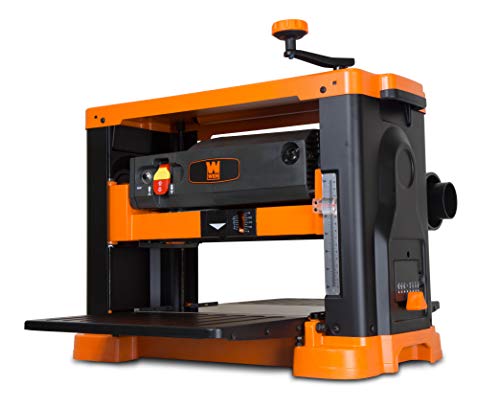
The WEN PL1326 is the spiral-head option, and it is the pick for figured timber that tears under straight knives. Its twenty-six staggered inserts each present a fresh edge as they rotate, so a nicked cutter no longer means a line across every board until the knives are changed. The thirteen-inch width matches the largest machine here, the feed rate suits steady single-pass work, and the adjustable dust port aims the hose where the extractor actually sits instead of where the factory assumed it would.
Specs
- 15 Amp motor
- 10,000 RPM cutterhead speed
- Spiral cutterhead with 26 staggered rotatable HSS inserts
- Feed rate of 26 FPM
- Planes stock 13 inches wide and 6 inches thick
- Adjustable dust port
- Depth stop included
Best for: Planing figured, knotty or reclaimed boards where a spiral head reduces tear-out.
Watch out for: The inserts are HSS rather than carbide, so confirm the insert type in the listing and keep spare inserts on hand before a big milling session.
ASIN: B08NWF6P3Q
Which One Fits Your Situation
You Mill Wide Panels and Want the Full Kit
Take the DW735X. Its thirteen-inch width and two feed speeds cover both rough sizing and finishing, and the tables, extra knives and dust-ejection chute arrive in the same box. It is the only pick here where the accessory set is part of the purchase rather than a follow-up order.
You Want the Simplest Proven Machine
Take the DW734. One feed speed, a three-knife head and a stated dust hood keep the decision short, and the long tables handle boards that shorter machines would let tip. It gives up half an inch of width to the thirteen-inch picks, which only matters if your panels regularly exceed twelve and a half inches.
You Work Mostly with Figured or Reclaimed Timber
Take the WEN PL1326. The spiral head is the honest answer to tear-out on curly grain, and the adjustable dust port makes hose routing easier in a small shop. Accept the single feed speed and the HSS inserts as the trade for a quieter, cleaner cut on difficult boards.
Your Extractor Hose Dictates the Fitting
Match the fitting to the hose first and the cutterhead second. The DW735X ejects through a chute with a hose adapter, the DW734 encloses the outlet with a hood, and the WEN port adjusts to aim the hose. Measure the hose diameter and the bend radius behind the bench before choosing, because the wrong fitting turns a working planer into a machine you cannot connect.
Common Mistakes
- Buying a planer for its motor rating and never checking whether the dust fitting is included in the box.
- Ordering a thirteen-inch machine for a bench that cannot support its tables, then blaming the planer for snipe on long boards.
- Assuming a spiral head means carbide inserts, when the listing may state HSS inserts that wear faster.
- Mixing up the DW735 and DW735X listings and receiving the base package without the extra knives and tables.
- Connecting a vacuum hose to a dust port of the wrong diameter and running the planer with the outlet blocked.
Frequently Asked Questions
Do I need a dust extractor, or will a bag work?
A bag on the chute or hood catches most chips for light sessions, and it is enough if you plane a few boards at a time. A vacuum extractor keeps the bed clearer on long milling days and stops fine dust settling across the shop. Whichever you use, the hose must fit the fitting without an adapter you have not bought yet.
Is a spiral cutterhead always better than straight knives?
Not always. A spiral head usually leaves less tear-out on figured grain and runs quieter, but straight knives cut faster on straight-grained stock and are cheaper to replace as a set. Choose by the timber you mill most often rather than by the cutterhead fashion of the moment.
What is the difference between the DW735 and the DW735X?
They share the same planer body and cutterhead, and the difference sits in the included components. The X package adds the infeed and outfeed tables and an extra set of knives, along with the dust-ejection chute and hose adapter. Read the included-components line on the listing before ordering so the package you receive matches the one you expected.
Can these planers handle reclaimed timber?
They can plane reclaimed boards, but only after the boards are checked for hidden nails, screws and grit, which destroy knives and inserts alike. Sweep each board with a metal detector or a careful visual check first, take light passes, and expect faster edge wear than on clean new timber.
More from Amazon
Programs that pair well with the guide above. Offers and eligibility are set by Amazon and may change.
Free shipping on eligible items, Prime Video and more. Eligible new members can start with a free trial.
Start a Prime free trialAudiobooks and podcasts to listen to on the go. Eligible new members can start with a free trial.
Try Audible freeAd-free music streaming. Eligible new subscribers can start with a free trial.
Try Music Unlimited freeA free business account with business pricing and bulk-buying tools for work, shop or home office.
Create a business accountAs an Amazon Associate we earn from qualifying purchases.

Write Your Review
No reviews yet. Be the first to share your experience!