

Key takeaways
- Inverter TIG welders with true high frequency start compared: AC/DC and DC models with HF non-contact arc starting, pulse control, and dual-voltage input.
High frequency start changes the first second of every TIG weld. Instead of scratching the tungsten on the work or tapping it down in a lift start, an HF start machine ionises the air gap and establishes the arc without the electrode touching the metal at all. The tungsten stays sharp and clean, the workpiece is not marked by a strike, and the start is repeatable — bead after bead, joint after joint. On thin stainless, on aluminium, and on any job where a contaminated start would show, that difference is not a luxury.

This guide covers only inverter TIG welders with high frequency start. Every pick below uses inverter technology — IGBT-based in the listings cited — and offers HF start as a named feature. Machines that offered only lift start or scratch start were excluded, however good their other specifications looked, because they do not meet the keyword’s central requirement. The specifications cited come from the manufacturers’ and Amazon US product listings for each model; no claim is made here that these machines were personally tested or used to weld.
Affiliate Disclosure: This article contains affiliate links. If you buy through links on this page, we may earn a commission at no extra cost to you. As an Amazon Associate, we earn from qualifying purchases. Product names, specifications, and availability are taken from the manufacturers’ and retailers’ listings at the time of writing and can change; check the product page before you buy.
Quick Comparison
| Model | Output | Current type | Input | HF start | Notable controls |
|---|---|---|---|---|---|
| Weldpro 200A AC/DC TIG Welder with Pulse | 200A | AC/DC TIG + stick | 110V/220V | HF AC and DC TIG modes | Pulse 0.5–200 Hz, foot pedal included |
| YESWELDER TIG-250P AC/DC | 250A | AC/DC TIG + stick | 220V class (check listing) | AC HF TIG / DC HF TIG modes | Pulse, 2T/4T, digital slope controls |
| LOTOS TIG200ACDC | 200A | AC/DC TIG + DC stick | 110V/220V | HF start, torch and pedal control | Foot pedal and argon regulator included |
| PRIMEWELD TIG225X | 225A | AC/DC TIG + stick | 120/240V class (check listing) | HF start per manufacturer documentation | Pulse, CK17 flex torch package |
1. Weldpro 200A AC/DC TIG Welder with Pulse — Best All-Round HF Package
ASIN: B0FQX7TJNX
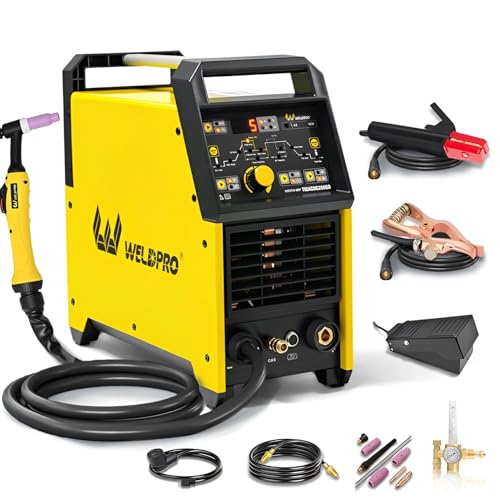
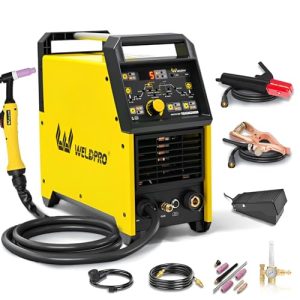
The Weldpro 200A AC/DC TIG Welder with Pulse is the most complete match for this keyword on its current Amazon US listing. The listing describes a five-in-one multiprocess machine — high-frequency AC TIG, DC TIG, AC pulse TIG, DC pulse TIG, and stick — built on IGBT inverter technology, with automatic 110V/220V dual-voltage detection. Crucially, HF is not an accessory claim here: the high-frequency modes are the named TIG modes, and the listing describes a high-frequency non-contact arc start that reduces tungsten wear and supports clean starts on delicate material.
Control depth is the other reason it leads this list. Pulse frequency is adjustable from 0.5 to 200 Hz, with adjustable peak amperage, upslope and downslope, AC balance and AC frequency for aluminium, and 2T/4T trigger modes. A large LED display shows parameters in real time. The stated duty cycle is 40% at the full 200A output, which is honest, mid-range workshop performance rather than an inflated headline figure.
The included kit also matters. The listing includes a TIG torch and a foot pedal, plus a flow meter, gas hose, ground clamp, and stick holder in the accessory descriptions. A foot pedal is how most welders actually control amperage mid-bead on aluminium, and many rival machines sell it separately. The trade-off is size: at a listed 61.8 pounds, this is a machine that lives on a cart or bench, not one you carry to a job in one hand. Choose it if you want one HF inverter machine for both aluminium and steel, with pulse control and the pedal already in the box.
2. YESWELDER TIG-250P AC/DC — Most Output in This List
ASIN: B08CBD1L69
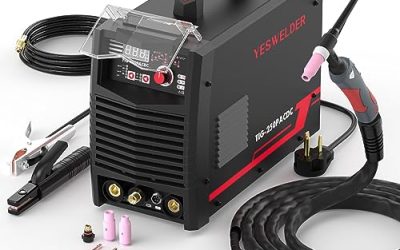
The YESWELDER TIG-250P AC/DC is a 250-amp, software-controlled square-wave AC/DC TIG inverter welder, with stick capability. Its documented welding modes include AC HF TIG and DC HF TIG, along with AC and DC pulsed TIG and spot welding — so high frequency start is built into both its aluminium and its steel TIG work, not limited to one polarity. That mode list is the key qualification for this guide, and it is stated in the model’s manual material rather than implied.
Output is the headline: up to 250A gives more headroom on thicker material than the 200-amp machines here, while the digital control set covers pre-gas time, start current, upslope and downslope time, finish current, and post-gas, with a choice of 2T or 4T trigger operation. Parameters can be saved so the machine recalls settings after power-off, according to the product material. The listed package includes WP-26 and WP-9 TIG torches, an electrode holder, a work clamp, and a gas hose; note that product material for this model states a foot pedal is not included, so budget for one if pedal control is how you weld.
Choose the TIG-250P if maximum amperage and a full digital slope-and-pulse control set matter more to you than dual-voltage convenience or an included pedal, and confirm the exact input-voltage requirements and current package contents on the Amazon US listing before ordering, because YESWELDER sells several similarly named TIG models, including a smaller 200-amp TIG-200P variant that is a different machine.
3. LOTOS TIG200ACDC — Straightforward HF AC/DC Value With Regulator Included

ASIN: B00AFM33R0
The LOTOS TIG200ACDC has been sold for years as a 200-amp AC/DC aluminium TIG welder with DC stick, built around a square-wave inverter. Its Amazon US listing states “HF start hand torch control and precise foot pedal welding heat control” directly in the product highlights, which qualifies it for this guide on the listing’s own words. Output is listed at 10–200A AC/DC for TIG, with automatic dual voltage and dual frequency input at 110V/220V, 50/60Hz, using a pigtail for the lower voltage.
The square-wave AC output is what makes this a genuine aluminium machine rather than a DC unit with an aluminium claim: AC is needed to break up aluminium’s oxide layer while welding, and the listing positions the machine for aluminium, stainless steel, mild steel, and other metals. Power efficiency is listed at 80%, and the cooling system is described as a Papst advanced cooling system in the product material.
The practical appeal is what arrives in the box. The listing title and highlights include a foot pedal and an argon regulator, two items a first-time TIG buyer otherwise has to source separately before striking an arc. Choose the TIG200ACDC if you want a simpler, long-established HF AC/DC package that is ready to connect to a gas bottle without a second round of accessory shopping. Its control set is more basic than the Weldpro’s — do not expect the same pulse range or display — so buyers who know they want fine pulse and AC-balance tuning should compare carefully before deciding on price alone.
4. PRIMEWELD TIG225X — 225-Amp AC/DC With a CK Torch Package

ASIN: B07BXHRBQ8
The PRIMEWELD TIG225X is a 225-amp IGBT AC/DC TIG and stick welder with pulse, sold on Amazon US in a package built around a CK17 flex torch and cable. Manufacturer documentation for the model describes AC/DC TIG with high-frequency starting, foot control, and adjustable AC settings aimed at aluminium work, which is the basis for its inclusion here: it is an inverter machine with HF start, not a lift-only unit.
The 225-amp rating places it between the 200-amp machines and the 250-amp YESWELDER in output, and the CK Worldwide torch in the identified Amazon package is a meaningful detail, because torch quality and cable flexibility affect how steadily you can hold an arc length — which, in turn, affects how much benefit you actually get from a clean HF start. Pulse capability is part of the model’s listed feature set, useful for limiting heat input on thinner material.
One caution is specific to this model and worth stating plainly. The TIG225X has been sold for several years and the manufacturer has updated its feature set over time, so the exact revision in a given Amazon listing may not include every feature shown on the manufacturer’s current page. A November 2026 availability check reported in secondary coverage also found no featured offer on this Amazon listing at that time. Treat this pick as a strong specification match that needs a careful listing check — confirm HF start, the torch package, and current availability on the product page before you buy, and consider the manufacturer’s own store as a cross-check for the current revision.
HF Start vs Lift Start vs Scratch Start
Because this keyword turns on one feature, the distinctions are worth making precisely.
High frequency start establishes the arc across an air gap. You position the tungsten close to the work, press the torch switch or pedal, and the HF unit fires the arc without contact. The tungsten is not dulled or contaminated by the start, and there is no strike mark. The trade-offs are cost and electrical noise: HF can interfere with sensitive nearby electronics, which is why some facilities restrict it.
Lift start (or lift arc) begins with the tungsten lightly touching the work at low current; lifting it draws the arc. It is clean compared with scratch start and produces no HF interference, but it is still a contact start, and technique affects consistency.
Scratch start is the simplest and roughest method — the tungsten is scratched along the work like a match. It is prone to sticking and tungsten contamination and is the method HF start exists to replace.
A machine that offers both HF and lift start, as several inverter models do, gives you a choice by environment. A machine that offers lift or scratch start only does not meet this guide’s criteria, and none is included above.
What Else to Check on an Inverter TIG Welder
AC vs DC output decides your metals. DC TIG covers steel, stainless, and most non-ferrous metals except aluminium and magnesium, which need AC for oxide cleaning. All four picks here are AC/DC machines, so aluminium is in scope for every one of them — but if you only ever weld steel, a DC-only HF inverter could serve you at lower cost; it is simply not what this list compares.
Duty cycle tells you how long the rated output can actually be sustained. The Weldpro’s stated 40% at 200A means four minutes of welding in ten at full power before thermal limits apply. Compare duty cycles at the amperage you will actually use, not just the headline maximum.
Pulse control alternates the current between peak and background levels, reducing total heat input while keeping the puddle stable. It helps on thin sheet, tubing, and heat-sensitive joints. The Weldpro’s 0.5–200 Hz range and the digital pulse settings on the YESWELDER are the deepest control sets in this list.
Input voltage decides where the machine can run. Dual-voltage 110V/220V models, like the Weldpro and the LOTOS, can start work on a household outlet at reduced output and use full output on a 220V circuit. Check the input requirements of the 250P and the TIG225X listings carefully, because full amperage always depends on the supply circuit, its breaker, and its wiring — consult a qualified electrician if you are adding a circuit.
What is included changes the real price. A foot pedal, a flowmeter or regulator, a gas hose, and a usable torch can add up to a significant second purchase. The Weldpro and LOTOS include pedals; the YESWELDER TIG-250P material states its pedal is not included. Price the complete, ready-to-weld package, not the bare machine.
Safety Notes for TIG Welding
This section is brief and general; it does not replace the machine manual, training, or local safety rules.
TIG arcs produce intense ultraviolet light and heat. Wear a proper welding helmet with the correct shade, flame-resistant clothing, and welding gloves, and cover exposed skin. Ensure adequate ventilation or fume extraction, especially on coated, galvanised, or unfamiliar metals, and never weld on containers that held fuel or solvents. Keep a suitable fire extinguisher nearby, clear flammables from the work area, and watch for hot metal after the arc stops — TIG workpieces stay hot without glowing. Use the correct shielding gas and secure gas cylinders upright so they cannot fall. If you are unsure about electrical installation, gas setup, or a material’s hazards, stop and get qualified help rather than improvising.
Frequently Asked Questions
Does HF start work on both AC and DC TIG?
On the machines in this guide, yes, where the listing names HF modes for both. The YESWELDER TIG-250P documents AC HF TIG and DC HF TIG modes, and the Weldpro lists high-frequency AC TIG among its modes alongside DC TIG. Always confirm the HF modes on the specific listing you buy, because variants differ.
Can an HF start machine also do lift start?
Some can. Several inverter models offer both start types so HF can be switched off around sensitive electronics. Dual capability is a bonus, not a requirement — what qualified every pick here is that HF start is present.
Why does HF start matter more on aluminium?
Aluminium work is unforgiving of contamination, and a contaminated tungsten or a strike mark can spoil a visible bead or a thin section. A non-contact HF start keeps the tungsten clean at the moment the puddle forms, which is when aluminium is least forgiving.
How many amps do I actually need?
As a rough orientation from the listings’ ranges, 200A covers most home and small-shop steel and aluminium work, including thicker sections at reduced duty cycle, while 225–250A adds headroom for sustained work on heavier material. Your supply circuit may limit usable output before the machine does, especially on 110V/120V input.
Conclusion
For most buyers, the Weldpro 200A AC/DC TIG Welder with Pulse (ASIN: B0FQX7TJNX) is the best inverter TIG welder with high frequency start in this list: HF AC and DC modes, a 0.5–200 Hz pulse range, dual voltage, and a foot pedal in the box. The YESWELDER TIG-250P AC/DC (ASIN: B08CBD1L69) offers the most output at 250A with documented AC and DC HF modes and full digital controls, minus an included pedal. The LOTOS TIG200ACDC (ASIN: B00AFM33R0) is the straightforward value package, with HF start stated in its listing and a pedal and regulator included. The PRIMEWELD TIG225X (ASIN: B07BXHRBQ8) adds a 225-amp option with a CK17 torch package, subject to confirming the current listing’s revision and availability. Whichever you choose, verify HF start, input voltage, and package contents on the product page before ordering — and weld with proper protective equipment and ventilation.
More from Amazon
Programs that pair well with the guide above. Offers and eligibility are set by Amazon and may change.
Free shipping on eligible items, Prime Video and more. Eligible new members can start with a free trial.
Start a Prime free trialAudiobooks and podcasts to listen to on the go. Eligible new members can start with a free trial.
Try Audible freeAd-free music streaming. Eligible new subscribers can start with a free trial.
Try Music Unlimited freeA free business account with business pricing and bulk-buying tools for work, shop or home office.
Create a business accountAs an Amazon Associate we earn from qualifying purchases.
Write Your Review
No reviews yet. Be the first to share your experience!