

Key takeaways
- Minute to Win It games for adults are sixty-second challenges built around everyday household items, such as cups, paper plates, balloons.
Minute to Win It games for adults are sixty-second challenges built around everyday household items, such as cups, paper plates, balloons, cotton balls and cookies, and the easiest way to run them is to pick six to eight quick games, set up each station in advance and track times on a shared scoreboard. They work because the rules are simple, the objects are cheap and failure is hilarious.
This guide is for hosts planning a 2026 party, office event or family gathering who want a ready-to-run lineup. It covers a game list by category, how to set up stations, how to keep score and how to adjust for the group’s size and mood.
How the Format Works
Each challenge has one goal, a single set of items and a sixty-second clock. Players try to complete the task before time runs out, and some games count successes within the minute instead of finishing. You can run them as head-to-head duels, team relays or a tournament where each person plays every game and totals their points.
Keep explanations short. Demonstrate the game once, let players ask questions and start the timer. If a game needs more than thirty seconds to explain, replace it with something simpler.
Game Ideas by Category
Stacking and Balancing Games
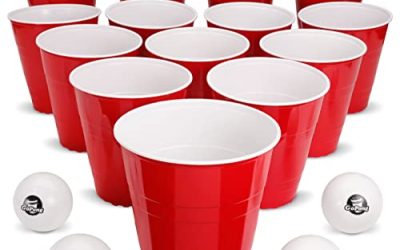
Stack plastic cups into a pyramid and back down again in a minute, build a tower from playing cards, or balance a coin on your forehead while moving it to your mouth. These games reward steady hands and calm nerves, and they look hilarious when someone rushes.
Blowing and Breath Games
Keep a balloon in the air using only your breath, blow cotton balls across a table into a bowl or push a ping pong ball across the room with a straw. These are easy to set up and work well for mixed ability groups.
Hand-Eye and Throwing Games
Toss ping pong balls into cups across a table, flip coins onto a plate or bounce a ball into a container. They need little space and encourage friendly trash talk.
Silly and Messy Challenges
Move cookies from your forehead to your mouth without using your hands, transfer candies with a drinking straw or pull tissues out of an empty box as quickly as possible. These are the crowd pleasers, but have napkins and a trash bin ready for the mess.
Sample Game Lineup
| Game | Items needed | Goal | Mess level |
|---|---|---|---|
| Cup tower | Plastic cups | Stack and unstack a pyramid | Low |
| Balloon keep-up | Balloons | Keep one in the air by blowing only | Low |
| Cotton ball relay | Cotton balls, a bowl, a straw | Blow balls into the bowl | Low |
| Face the cookie | Round cookies | Move one from forehead to mouth | Medium |
| Card tower | Playing cards | Build the highest stable tower | Low |
| Candy straw transfer | Candies, straws, two bowls | Move as many as possible by suction | Low |
| Ping pong toss | Ping pong balls, cups | Land balls in cups | Low |
Set Up Stations and Scoring
Create one station per game, with all items inside a labeled tray or box. Place a printed instruction card at each, with the goal, the time limit and a diagram if helpful. If you have a large group, run two copies of each station so players do not wait.
For scoring, use a simple points system: three points for a win, two for a close finish and one for participation. Keep a scoreboard where everyone can see it, and use a phone timer or a kitchen timer with a loud signal. For team play, rotate players between teams or let each team pick a champion for each game.
Adjusting for Your Group
For a quiet group, choose low-motion games such as stacking and balancing. For a loud group, add relays and messy challenges. If guests include people with limited mobility, offer seated versions and pair each person with a helper. Always allow someone to pass a game without pressure.
For larger groups, run elimination style: the slowest person in each round sits out until a final champion emerges. For smaller groups, give everyone the same challenge and compare scores at the end.
Before You Start Checklist
- Choose six to eight games and test each one yourself
- Gather and label all items in separate trays
- Prepare a scoreboard and a timer
- Place napkins, wipes and trash bins nearby
- Write short instruction cards for each game
- Decide on prizes or keep it purely for fun
Common Mistakes
Choosing games that need too many parts slows the party. If you spend five minutes resetting each station, energy drops. Another mistake is skipping the practice round, which leads to confusion and unfair results. Test the games and set a clear start signal.
Also watch for food allergies, since many games use cookies, candies or other snacks. Ask guests ahead of time, and swap in non-food items when needed. Finally, keep the pace moving by limiting each person to one try per game unless the group agrees to a redo.
Team and Tournament Formats
Head-to-Head Duels
Two players or teams face off on identical stations. The faster or higher-scoring side wins a point. Duels are easy to watch and create a natural audience, which makes the event feel like a show. Keep a bracket on a whiteboard so everyone can follow who plays next.
Relay Rounds
Divide the group into teams and have each member complete a short task before tagging the next. Relay formats are good for large groups since everyone stays involved and cheering. Choose tasks that reset quickly, like stacking cups or moving candies between bowls.
Full Tournament Night
Every guest plays every game, collecting points on a scoreboard. At the end, the highest total wins a prize or a title. This takes the longest, but it rewards consistency and gives quieter guests a chance to shine on their favorite challenge.
Keep the Energy High
Pacing is the secret ingredient. Start with an easy game that anyone can do, build toward messier or harder ones in the middle and finish with a funny, high-energy challenge. Play upbeat music in the background and encourage the audience to count down loudly from ten when time is nearly up.
Ask a friend to act as emcee, announcing each game, calling the start and reading out times. A little commentary turns simple challenges into entertainment, and it frees you, as the host, to reset stations. Take short breaks for snacks and drinks, since groups usually laugh harder when they have time to recover.
Lastly, record a few clips or photos. Failures such as a tipped cup tower or a cookie rolling off a forehead make some of the best memories, and sharing them afterward keeps the fun going long after the party ends.
Writing Fair Rules
Arguments over a disputed cup or a ball that bounced out of reach can slow a game and dampen the mood. Prevent this by deciding a few rules up front. State what counts as a success, such as a ball staying in the cup, and what counts as a miss. Name one judge for each station, and make the judge’s call final. If a mishap is clearly accidental, such as a table bump, allow a quick redo.
It also helps to even out the field. If one player is much more skilled, give them a small handicap, like using the non-dominant hand or a smaller target. This keeps scores close and makes the final standings more exciting for everyone.
Related guides
- How To Hang Streamers And Backdrops Without Damaging Walls
- How To Fix A Christmas Light Strand That Is Half Out
- How To Wash A Light Up Ugly Christmas Sweater
Frequently Asked Questions
How many games should I plan?
Six to eight is about right for a party of an hour or two. Prepare a couple of extras in case a game falls flat or the group wants more.
Do I need prizes?
No, but small prizes add excitement. A silly trophy, bragging rights or a prize basket for the top scorer works well and costs very little.
Can these games work in an office?
Yes. Choose clean games using office supplies like paper cups, sticky notes and pens, and keep the mess low. Team formats help include everyone and keep the event inclusive.
What if someone cannot do a physical game?
Offer an alternative role such as timekeeper, judge or scorekeeper, or adapt the game to a seated version. The goal is for everyone to feel included and enjoy the evening.
More from Amazon
Programs that pair well with the guide above. Offers and eligibility are set by Amazon and may change.
Free shipping on eligible items, Prime Video and more. Eligible new members can start with a free trial.
Start a Prime free trialAudiobooks and podcasts to listen to on the go. Eligible new members can start with a free trial.
Try Audible freeAd-free music streaming. Eligible new subscribers can start with a free trial.
Try Music Unlimited freeA free business account with business pricing and bulk-buying tools for work, shop or home office.
Create a business accountAs an Amazon Associate we earn from qualifying purchases.





Write Your Review
No reviews yet. Be the first to share your experience!