

Key takeaways
- A solid starting point is two to three latex balloons per guest for a casual party, rising to five or more per guest if balloons are the main decoration.
A solid starting point is two to three latex balloons per guest for a casual party, rising to five or more per guest if balloons are the main decoration. Your final count depends on room size, balloon type, and whether you want loose balloons, bunches, or a garland.
Most people run short because they count heads and forget everything else: the entrance, the food table, the photo corner, and the inevitable few that pop or leak before the doorbell rings. This guide walks through a simple way to turn guest count and floor space into a number you can actually order, so you are not making a panicked store run the morning of the party.
The Quick Formula for Balloon Counts
Start with guests, then adjust for how heavily you want to decorate. Think in three density levels, and pick the one that matches the look you picture in your head.
- Light touch: about two balloons per guest. Enough for a few bunches at the entrance and one cluster by the table.
- Standard party: about three to four balloons per guest. This fills a living room or small hall comfortably.
- Balloon-heavy: five or more per guest. Think ceiling coverage, a garland arch, or a balloon-filled room for kids.
Next, add a buffer of ten to fifteen percent for duds. Some balloons have weak spots, some tie off badly, and some pop while you inflate them. If you are inflating with a hand pump on the day, lean toward the higher buffer, because tired hands make more mistakes.
Count by Space, Not Just by Guests
Guest count tells you about celebration energy, but space tells you about visual impact. A party for ten people in a large garage needs more balloons than a party for ten in a small apartment, because empty space swallows a small display.
Small rooms and apartments
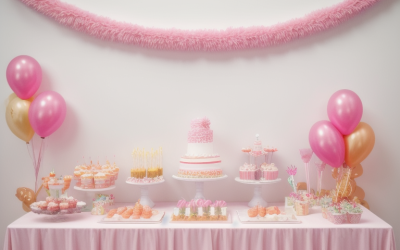
In a compact room, a few well-placed clusters beat scattered singles. Plan one cluster of five to seven balloons at the entrance, one by the dessert table, and one behind the guest of honor. Floor balloons can also crowd walkways, so keep the majority off the ground.
Large halls and backyards
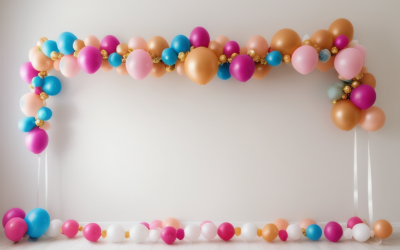
Big spaces need anchor points. Use tall bunches at the corners and along the entrance path, and add a focal feature such as an arch or garland over the main table. Outdoors, wind and sun shorten the life of a display, so build in extra and stage inflation close to start time.
Ceiling coverage
Balloons that float against a ceiling need helium and a count of roughly one per square foot of ceiling you want to cover for a thin layer. Treat this as a rough planning figure and expect to adjust once you see the first dozen go up.
Air-Filled Versus Helium Balloons
The balloon type changes your math. Air-filled balloons last longer, since they do not lose lift, so you can inflate them days ahead and use fewer spares. Helium balloons look magical but float for a limited time, and the exact duration varies with balloon size, material, and room temperature.
If helium is the plan, lower the quantity of latex and consider a handful of large foil balloons as showpieces. Foil shapes typically stay inflated longer than latex, so one or two number or letter foils can anchor a display while a modest number of latex balloons fill in around them. Buying a helium fill service or tank rental is usually cheaper than topping up many small balloons at once, so ask about it before you finalize the count.
Sample Counts by Party Type
Use this table as a planning sketch, then adjust for your venue. The ranges assume standard-size latex balloons and a mix of bunches plus a few features.
| Party type | Guests | Balloon approach | Planning range |
|---|---|---|---|
| Kids birthday at home | 10 to 15 | Floor play balloons plus entrance bunches | 40 to 70 total |
| Adult dinner party | 8 to 12 | Two or three tasteful clusters | 15 to 30 total |
| Graduation in a hall | 40 to 60 | Tables bunches plus one garland | 120 to 200 total |
| Baby or bridal shower | 15 to 25 | Arch or backdrop focus | 60 to 100 total |
| Backyard celebration | 25 to 40 | Anchored bunches plus a feature arch | 80 to 150 total |
If your design is a garland, remember that a full garland uses many small balloons. A rough rule is that a few feet of dense garland takes dozens of balloons, so build the garland count separately and then add it to the loose balloons.
Before You Buy Checklist
- Write down your guest count and the venue size in square feet.
- Pick a density level: light, standard, or balloon-heavy.
- Decide on air-filled, helium, or a mix of both.
- Add ten to fifteen percent for popped or flawed balloons.
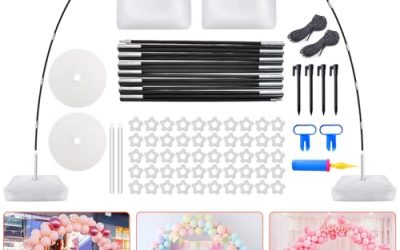
- Confirm you have a pump, ribbon, and a way to hang or weigh down bunches.
- Choose colors first, then split the total count across them.
- Plan when you will inflate so nothing sags before guests arrive.
Splitting the Total Across Colors and Sizes
Once you have a total, divide it by role. A balanced display usually mixes sizes: larger balloons for impact, mid-size for volume, and a few small ones for texture in garlands. A simple split is about half in the main color, a third in a supporting color, and the remainder in an accent shade.
Using too many colors makes a display look busy, and the count gets harder to manage. Sticking to two or three keeps your order simple and your party looking intentional. If you need help with color choices, a clear palette also makes it easier to buy balloons in matching packs rather than assorted bags.
Plan Inflation Day So the Count Holds Up
Even a perfect number on paper falls apart if inflation takes longer than expected. A hand pump fills a standard balloon in under a minute once you find a rhythm, but tying each knot adds time, and fingers tire quickly after the first fifty. Budget about a minute per balloon for hand work, so a 100-balloon order needs well over an hour and a half. An electric pump cuts that sharply, and a second person tying while the first inflates roughly doubles your speed.
Sort balloons by color before you start, and inflate the largest or most important group first, because those are the pieces guests will notice from the door. Keep a measuring guide, such as a cardboard circle, so sizes match within each cluster. Matching sizes matters more than people realize, since a group of identical balloons looks deliberate while a mixed batch of near-sizes looks accidental.
Finally, store finished balloons in large trash bags or a spare room until setup. Keep them away from sharp corners, radiators, and sunny windows. If the party is in warm weather, inflate slightly under capacity, because heat expands the air and pushes weak balloons past their limit. A slightly soft balloon looks fine, while a popped one is gone for good.
Related guides
- How To Hang Streamers And Backdrops Without Damaging Walls
- How To Fix A Christmas Light Strand That Is Half Out
- How To Wash A Light Up Ugly Christmas Sweater
Frequently Asked Questions
How many balloons do I need for a 20-person party?
For a standard look, plan on about 60 to 80 latex balloons, which covers bunches, a table display, and a buffer for popped ones. A light touch could drop to 40, while a balloon-heavy room might need 100 or more.
How many balloons make a balloon arch?
A full arch generally needs a lot more balloons than people expect, often well over a hundred for a dense, professional look. A thinner, spaced-out arch uses fewer. Count your arch separately from your loose balloons so the total stays accurate.
Should I buy extras?
Yes. Ten to fifteen percent over your planned total is a sensible buffer, since some balloons pop during inflation or have flaws. Extras also let you replace any that deflate early in the day.
How far in advance can I blow up balloons?
Air-filled latex balloons can often be inflated a day or two ahead and kept in a cool room. Helium balloons are best inflated on the day, close to party time, because the lift fades. Keep all balloons away from direct sun and heat, which can make them pop, and plan your 2026 party timeline with that in mind.
More from Amazon
Programs that pair well with the guide above. Offers and eligibility are set by Amazon and may change.
Free shipping on eligible items, Prime Video and more. Eligible new members can start with a free trial.
Start a Prime free trialAudiobooks and podcasts to listen to on the go. Eligible new members can start with a free trial.
Try Audible freeAd-free music streaming. Eligible new subscribers can start with a free trial.
Try Music Unlimited freeA free business account with business pricing and bulk-buying tools for work, shop or home office.
Create a business accountAs an Amazon Associate we earn from qualifying purchases.






Write Your Review
No reviews yet. Be the first to share your experience!