

Key takeaways
- The best party games for adults: word, conversation, karaoke, physical and drinking games compared by group size, content level and setup time.
Incohearent is the best overall party game for adults on this list: it is a “guess the gibberish” card game that works for bachelorette parties and game nights, plays out loud so everyone laughs, and ships with 300 cards according to its listing. “Party games for adults” here means low-prep group games that need a few friends, a few cards or props, and no tabletop experience. If your crowd prefers singing, physical silliness, conversation prompts or a drinking game, the other five picks cover each of those moods.
Quick List
- Incohearent – best for a mixed group that wants a loud, laugh-out-loud word game
- Put A Finger Down – best for starting conversations and getting a quiet group talking
- Grab The Mic – best for karaoke-style fun without needing to sing well
- It’s Bananas – best for physical, silly play and white-elephant style gatherings
- Tumbling Tower Drinking Game – best for adults who like a classic stacking game with a drinking twist
- Rubber Mat Drinking Board Game – best for a table-top drinking game that is quick to set up
Which One Is Right for You?
| If you… | Choose |
|---|---|
| want one game that suits a bachelorette party or a game night | Incohearent |
| have guests who barely know each other | Put A Finger Down |
| want people to laugh at their own singing | Grab The Mic |
| are hosting a holiday or office gathering with a mixed crowd | It’s Bananas |
| like a build-and-topple game and plan to drink socially | Tumbling Tower Drinking Game |
| want a board-style drinking game with minimal setup | Rubber Mat Drinking Board Game |
Pick based on who is in the room before you consider the game. A group of old friends can handle risky prompts, while a mixed group of coworkers needs something gentle. Consider player counts, as some games listed here state a range and some do not, and decide whether you want alcohol involved. A game that works well with water, soda or tea is safer for a wider guest list.
All 6 Picks in Detail
1. Incohearent – Best for a Loud, Laugh-Out-Loud Word Game
As an Amazon Associate we earn from qualifying purchases at no extra cost to you.
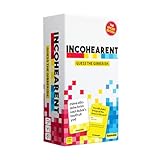
The listing describes Incohearent as the “guess the gibberish” party game by Relatable, a funny adult card game for bachelorette parties and game nights, and states it includes 300 cards. The central idea is that players read phrases that sound like nonsense, and others work out what the real phrase is. It rewards quick thinking and loud reading, and everybody can play at once without needing to know specialized rules.
The title is cut off after “300 Ca,” so confirm the exact contents, player count and rules on the product page. The listing’s mention of adult humor suggests some cards may be risque, so check the content before using it with mixed-age company.
- Type: party card game
- Card count: 300 per listing name
- Style: guess the gibberish, word game
- Audience: adults
- Player count and round length: confirm on listing
Pros
- Easy to explain and fast to start
- Plays well in teams, which makes bigger groups workable
Cons
- Some cards may be too mature for mixed company
- Reading aloud can be tiring for quieter guests
To get the most out of it, split into two teams, set a timer for each turn and keep score on a piece of paper so the competition stays friendly. Let people who are less confident read the easier cards first, and hand the sillier ones to the more outgoing players. It is the louder, more energetic cousin of the conversation game that follows.
2. Put A Finger Down – Best for Getting a Quiet Group Talking
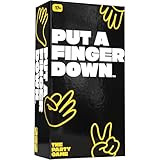
Hunch Games’ Put A Finger Down is described as a party card game for groups and game night, positioned as a conversation starter with quick setup. The usual idea behind this kind of game is that a prompt is read and players react to whether it applies to them, which turns small facts and confessions into discussion. It suits dinners, family-adjacent gatherings and new friend groups, where an icebreaker is more useful than a competition.
The exact rules, number of cards and recommended player count are not in the shortened title, so read the product page for details and check how mature the prompts are.
- Type: conversation-oriented party card game
- Setup: quick, per listing name
- Audience: groups and game night
- Style: prompts that spark discussion
- Card count, player count, age rating: confirm on listing
Pros
- Works as an icebreaker with minimal rules
- Low pressure for shy players
Cons
- Less competitive, so some groups find it too gentle
- Some prompts may be awkward for coworkers
Keep a bowl of snacks within reach and allow players to pass on any prompt they would rather not answer, which keeps the mood relaxed. It also works well at the start of an evening, because the answers give guests things to talk about for the rest of the night. Choose it over Incohearent when you want talking rather than shouting.
3. Grab The Mic – Best for Karaoke Without the Pressure

Grab The Mic is an award-winning karaoke-style party game for “bad singers,” with a foam microphone, 120 word cards (250 words), and a stated player range of 2 to 12 for ages 8 and up. That known range makes it easy to plan. Instead of requiring a song library, it gives you words to work into improvised singing, which levels the field for people who think they cannot sing.
The cards and the foam mic are the whole kit, so there is no tech to set up. It is more family-friendly than some adult games, which is useful if you want an inclusive party game.
- Type: karaoke-style party game
- Components: foam microphone, 120 word cards (250 words) per listing
- Players: 2 to 12 per listing
- Age: 8 and up per listing
- Round length: confirm on listing
Pros
- Clear player range and age rating
- Suits mixed ages and levels of confidence
Cons
- Requires people to be willing to sing out loud
- Gets noisy, which may bother neighbors
If your group is shy, have the host go first and make a fool of themselves so everyone else feels safe. A phone timer helps keep turns short, and a simple scoreboard adds a competitive layer without anyone needing to sing in tune. It is the most family-friendly of the six, which makes it better than Incohearent for multi-generation events.
4. It’s Bananas – Best for Silly, Physical Play

The listing for It’s Bananas, from McMiller Entertainment, calls it a hilarious monkey tail party game for adults and families and a funny white elephant game for Halloween and other events. The monkey-tail idea implies a physical game where players wear a tail and try to snatch others’ tails, which means it works best in a room with space to move.
The exact rules, number of players and what comes in the box are not in the short title, so confirm them on the product page. Because the game involves moving around, clear the space of fragile items and glass before playing.
- Type: physical party game
- Theme: monkey tails
- Audience: adults and families
- Occasion: parties, holidays, white elephant exchanges
- Player count and contents: confirm on listing
Pros
- Active play breaks up long evenings
- Works for adults and families
Cons
- Needs floor space and willing participants
- Not suited to anyone with mobility limitations
Set boundaries before play: agree on where the play area ends, take off watches and jewelry that could snag, and decide how a round ends. As a white-elephant style item, it can also be wrapped and swapped at a holiday party, where its silliness suits a gift exchange. It is the only physically active game here, so it complements the card games rather than competes with them.
5. Tumbling Tower Drinking Game – Best for a Stack-and-Topple Twist

The Gamie set is described as a tumbling tower drinking game for adults, with four glasses and 48 wooden blocks that carry challenges. The mechanic of pulling blocks and trying not to topple the tower is familiar, and the challenges add the party element. It suits house parties, game nights and birthday gatherings where guests already plan to drink.
Because it is a drinking game, it should be played by adults of legal drinking age only, at a pace each person chooses. Offer non-alcoholic drinks so no one feels pressured, and do not drive after playing.
- Type: block-stacking drinking game
- Blocks: 48 wooden blocks with challenges
- Glasses: 4 included
- Audience: adults
- Player count and tower size: confirm on listing
Pros
- Familiar mechanic that most people understand at once
- Glasses are included in the box
Cons
- Not suitable for groups that do not drink
- Falling blocks can be noisy and may scatter
Play on a stable table with enough room that falling blocks do not roll onto the floor, and keep drinks away from the tower so spills do not damage the blocks. Agree on the rules for each challenge before the first turn, and let any player skip a challenge they dislike. Next to the rubber-mat game, this one offers more physical suspense and less structure.
6. Rubber Mat Drinking Board Game – Best for Quick Table-Top Play

This is a drinking board game on a rubber mat, described as a funny, interactive party game for game night, birthdays and family gatherings. A mat game is attractive because it lays flat on any table, packs away easily and avoids the pieces and mess of some alternatives.
The listing title does not give the rules, number of players or contents, so confirm them on the product page. As with the tower game, it is intended for adults who choose to drink and should be played responsibly, with non-alcoholic options available.
- Type: board-style drinking game
- Material: rubber mat
- Audience: adults
- Occasion: game night, birthdays, gatherings
- Rules, player count, extra pieces: confirm on listing
Pros
- Lays flat and is easy to store
- Quick to set up compared with larger games
Cons
- Details are sparse in the title
- Only works if players want to drink
Read the included instructions before guests arrive so you can teach it in a minute, and wipe the mat after play so it stays in good condition. As with any drinking game, tell guests they can swap in a soft drink at any time. It is the simplest of the two drinking games, and the better one for small tables.
Specs Compared
| Pick | Format | Components per listing | Players | Age / audience | Alcohol involved |
|---|---|---|---|---|---|
| Incohearent | Card game | 300 cards | Confirm on listing | Adults | No, per listing name |
| Put A Finger Down | Card game | Cards, count confirm on listing | Groups; count confirm on listing | Confirm on listing | No, per listing name |
| Grab The Mic | Karaoke word game | Foam mic, 120 word cards | 2 to 12 | Ages 8 and up | No |
| It’s Bananas | Physical tail game | Confirm on listing | Confirm on listing | Adults and families | No, per listing name |
| Tumbling Tower Drinking Game | Stacking game | 48 wooden blocks, 4 glasses | Confirm on listing | Adults | Yes, drinking game |
| Rubber Mat Drinking Board Game | Mat board game | Rubber mat, other pieces confirm on listing | Confirm on listing | Adults | Yes, drinking game |
How We Chose These
This guide is built from research, not from playing the games ourselves. We started with the current catalog listings and compared what each listing name says about the format, number of cards or pieces, stated player range and intended audience. We wanted a mix of moods, from a calm conversation game to a physical game and two drinking games, and we kept the products in the order supplied. Where a listing name is cut off or does not state a detail such as the rules or player count, we tell you to confirm it on the product page instead of guessing. We also drew on general party-hosting guidance and responsible-drinking advice.
What to Look For
Match the Game to the Group Size
Group size decides most of what works. Card games with team play, like Incohearent, scale to groups of six to twelve, while a conversation game suits four to eight people sitting around a table. Physical games need space for the number of players, and stacking games suit a handful of people around one table. If the listing states a range, such as the 2 to 12 players on Grab The Mic, plan within it. If it does not, assume the game works best in a group of four to eight and confirm on the product page.
Check Content Level and Age Rating
Games marketed to adults can include crude humor or mature prompts. If the group includes coworkers, relatives or acquaintances, read the product description for the tone and consider previewing a few cards. Games with an age rating, such as ages 8 and up, give a clearer signal of what is appropriate. For mixed-age events, choose games with a lower age rating and keep the more mature ones for later in the evening.
Setup, Teach Time and Round Length
The best party games take under five minutes to explain and about 20 to 30 minutes to play a round. A game that needs a rulebook read aloud will lose a lively crowd. Quick-setup games, like the ones noted for fast setup, keep momentum. If you are hosting, keep a short plan: introduce the game in one minute, play a practice round, and start. Rotate games every 30 to 45 minutes so the energy does not fade.
Playing Responsibly With Drinking Games
Drinking games should be played only by adults who are of legal drinking age, which is 21 in the United States, and nobody should feel pressured to drink. Offer water and non-alcoholic alternatives, let players set their own pace, stop if anyone seems unwell, and never drive after drinking. If you want the same game without alcohol, many challenge-style games can be played with soda, juice or by doing silly dares instead.
Build an Evening, Not Just a Game
A good party game night has a shape. Start with something easy that works while people are still arriving, move to a main event when the group is full, and finish with a lighter game that people can drift in and out of. Keep food finger-friendly so players can eat while they play, and avoid greasy snacks that mark cards. Have a spare set of pens, a timer and a small scoreboard ready, because a missing timer is a common reason games stall. Finally, ask guests in advance whether anyone prefers not to play a particular type of game, which prevents awkward moments later.
Space, Noise and Accessibility
Loud word games and karaoke-style play can carry through apartment walls, so warn neighbors for a big event and finish before quiet hours. Seating matters too: card and conversation games work around a coffee table or dining table, while physical games need an open floor. Think about accessibility as well. Games that rely on fast reading or tiny print can exclude guests with vision difficulties, and those that rely on standing and chasing can exclude guests with limited mobility. Having a seated alternative ready means nobody has to sit out the whole evening.
Replay Value and Extra Cards
A game with 300 cards or more can be played several times before the prompts repeat, while a game with a small deck gets stale after two or three sessions. Consider how often your group meets: a monthly game night needs more replay value than a one-off event. Shuffle thoroughly, remove cards your group dislikes, and check the manufacturer’s page for expansion packs if you want to keep a game fresh.
Worked Example
You are hosting 8 friends on a Saturday. Start with Put A Finger Down while people arrive, which takes no teaching. Move to Incohearent in two teams of four for a loud middle hour. Finish with Grab The Mic for a few laughs. That sequence moves from quiet to loud, uses three games, and avoids drinking games if some guests do not drink.
Questions
What is the best party game for a large group?
Team-based games like Incohearent scale well because many people can join in at once. Karaoke-style games with a stated range of up to 12 players are another good choice.
Are there party games that do not involve drinking?
Yes, most of the games here, including Incohearent, Put A Finger Down, Grab The Mic and It’s Bananas, do not involve alcohol according to their listings. Only the tower and mat games are described as drinking games.
What games work for people who do not know each other?
Conversation-starter card games and team word games help strangers talk without needing personal knowledge. Avoid highly personal or mature prompts at first and pick lighter ones.
How many games should I bring to a party?
Two to three games cover a typical evening, since people usually play each for 30 to 45 minutes. Choose a mix of quiet and loud options so you can adjust to the mood. Bring a backup that needs no setup in case the first choice does not suit the group.
Can I play drinking games with non-alcoholic drinks?
Yes, you can replace alcohol with soda, juice or water and keep the rules the same. This makes the game accessible to guests who do not drink and keeps the focus on the fun.
Is it safe to play physical games indoors?
It can be, provided you clear furniture, glass and fragile items and set boundaries before play. Avoid physical games on slippery floors and stop if anyone looks uncomfortable. Remind players to remove shoes with hard soles or loose jewelry, and keep pets and small children out of the play area.
Update History
- October 20, 2026 – Initial publication; product set drawn from current catalog listings.
- Check the product page for current specifications and availability before buying.
Sources
- Retailer listing titles and specification fields for every product covered
- General party-hosting practice for group size, teaching time and game rotation
- General responsible-drinking guidance for social settings








Write Your Review
No reviews yet. Be the first to share your experience!